Jeffrey Epstein & Prince Andrew Ties
Overview
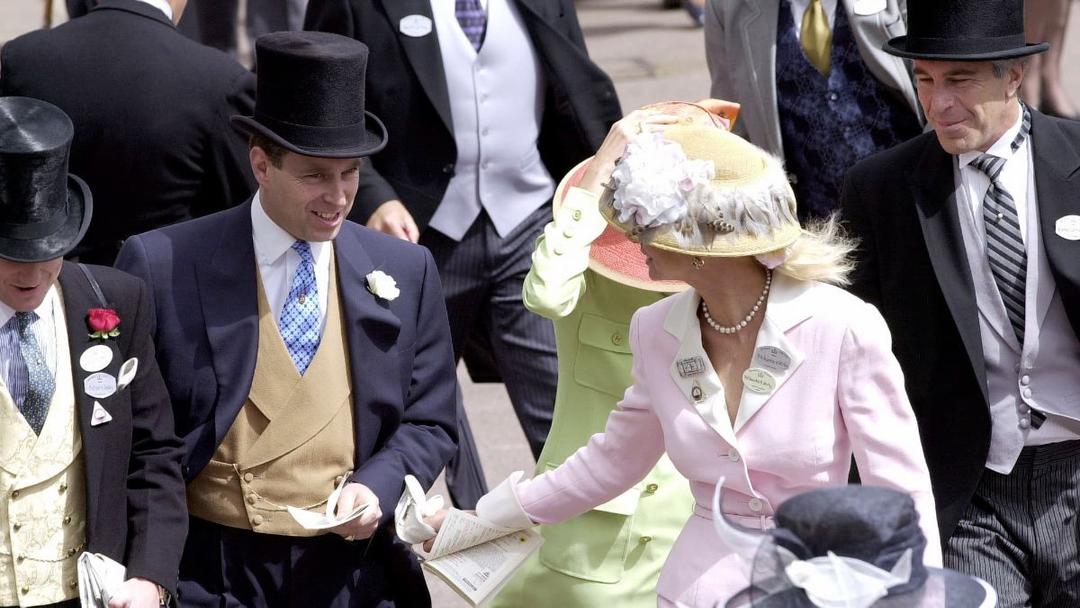
- Andrew Mountbatten-Windsor's (formerly Prince Andrew) ties to Jeffrey Epstein date to the 1990s, likely via Epstein accomplice Ghislaine Maxwell or Andrew's ex-wife Sarah Ferguson, drawing him into overlapping royal, financial and intelligence-linked circles that later sat at the core of trafficking allegations.
- Epstein victim Virginia Giuffre alleged that, at 17, she was trafficked by Epstein and Maxwell to have sex with Andrew in London, New York and the U.S. Virgin Islands — claims he denies but that recast Epstein as part of a global elite abuse network.
- A photo of Andrew with Giuffre at Maxwell's London home, backed by flight logs and witnesses, became key evidence; while Andrew and Maxwell called it fake, several analysts and outlets argue the technical and testimonial record supports it.
The Spin
Left narrative
The Andrew–Epstein saga exposes how hereditary privilege protects the powerful long after their misconduct is known. Andrew’s decades of entitlement, covered trips, and disdain for accountability were indulged by a deferential system until public fury forced action. His fall shows a monarchy insulated from ordinary justice, propped up by myth and class loyalty.
Right narrative
Andrew's downfall reflects a moral frenzy that treats a disgraced yet uncharged man as a national villain. His poor judgment with Epstein doesn't justify erasing birthright or turning the monarchy into a political casualty. Excessive punishment risks emboldening anti-royal forces and destabilizing long-standing constitutional norms.
Establishment-critical narrative
Andrew's case shows how power protects itself. A prince tied to an intelligence-linked trafficking network pays a secretive settlement, loses titles mainly for optics and is shielded from real scrutiny. The monarchy, government and media on both sides all helped contain the scandal rather than fully expose the system behind it. While his arrest is a nice first step, only time will tell if he actually faces justice.
Background & Relationship Origins
Andrew's connection to Jeffrey Epstein traces back to the 1990s.
He has long said the introduction occurred in 1999 through Ghislaine Maxwell, then a close associate of both men.
Later disclosures complicated this account. In post-conviction interview transcripts, Maxwell said it would "never have occurred" to her to introduce them, while in 2011, Andrew's then-private secretary, Alastair Watson, stated his boss met Epstein in the early 1990s.
Those comments align with early, later-scrubbed reports suggesting Andrew's ex-wife, Sarah Ferguson, former Duchess of York, may have facilitated contact. These accounts place Epstein and Ferguson in overlapping social settings in Nantucket and Martha's Vineyard in the U.S., raising the possibility of an earlier or alternative introduction.
Social Circles and Early Friendship
In the early 2000s, Epstein and Maxwell moved within elite Anglo-American networks that increasingly overlapped with Andrew's. Epstein was widely described as cultivating powerful acquaintances to enhance his influence and social standing.
Andrew attended functions hosted by Epstein and Maxwell, and they appeared at royal events, including the Queen's 40th birthday celebration for him and the 18th birthday of his daughter, Princess Beatrice, helping normalize their presence within royal-adjacent circles.
Flight logs show Andrew on Epstein's private jet multiple times, with visits to Epstein's New York mansion and properties in Palm Beach, Fla., and the Caribbean. While Andrew has described the relationship as casual, contemporary reporting depicts a sustained and mutually beneficial social alignment.
Post-Conviction Contact and Emails
After Epstein's 2008 conviction and 2009 release, Andrew's contact with him did not immediately end. Emails released in court records show Andrew writing in April 2010 that it would be "good to catch up in person" and that he would try to visit New York.
Further correspondence from early 2011, disclosed in regulatory filings, shows a "member of the British Royal Family," believed to be Andrew, arranging meetings and signing off with, "Keep in close touch and we'll play some more soon!!!!" These exchanges contradict Andrew's later claim that contact ended in 2010.
New York Visits and Shared Social Events
Emails and planning correspondence indicate Andrew's December 2010 stay at Epstein's Manhattan mansion was carefully arranged, including logistics for his Metropolitan Police protection officers. A former officer later said their role was limited to security, underscoring how much interaction occurred out of public view.
During that visit, Andrew was the guest of honor at a dinner at Epstein's home attended by figures such as Woody Allen, Katie Couric and George Stephanopoulos. Reporting described him staying in a room nicknamed "Room Britannica" and later being photographed walking with Epstein in Central Park.
Subsequent disclosures included an email in which Andrew reportedly told Epstein, "we are in this together" after the resurfacing of a photo with Epstein victim Virginia Giuffre. Parallel revelations about Ferguson's continued correspondence with Epstein reinforced perceptions of a wider, ongoing comfort with him within Andrew's circle.
Divergent Perspectives on the Relationship
Media interpretations of the Andrew-Epstein relationship diverge sharply. Establishment-critical investigators emphasize its reciprocal value, portraying Epstein as using Andrew's status to elevate himself while offering Andrew access to influential U.S. networks.
Royalist commentators stress Andrew's claim that Epstein was merely an acquaintance and that the 2010 New York visit was intended to sever ties. They frame the relationship as a series of misjudgments rather than evidence of deeper complicity.
Mainstream outlets documented inconsistencies between Andrew's statements and later-released emails, noting how those discrepancies shaped legal scrutiny and public skepticism without making definitive judgments.
Ongoing Scrutiny
How Andrew and Epstein first met remains unresolved. Newly surfaced interviews, archival reporting and email releases continue to challenge earlier explanations and suggest the relationship may have begun earlier than Andrew has acknowledged.
These uncertainties shape how later allegations are interpreted. As further Epstein-related material is reviewed by courts and lawmakers, Andrew's evolving account of his contact with Epstein and Maxwell continues to attract legal, journalistic and public attention.
The Spin
Pro-establishment narrative
Andrew's association with Epstein reflected personal vanity, entitlement and poor judgment fostered by royal insulation, as opposed to the fringe theory of some coordinated criminal design. As with figures like former Ambassador Peter Mandelson, Epstein exploited Andrew's elite insecurity and access. Andrew's failures were part of his personal moral collapse within permissive institutions, not evidence of a hidden, orchestrated network.
Establishment-critical narrative
Andrew's exceptionally close bond with Epstein — decades-long friendship, hosting him at the Queen's birthday, escorted by Maxwell on eight joint holidays and still accepting Epstein's money and "girl massages" deep into the 2000s — went far beyond casual friendship or royal entitlement. This was a sustained, intimate alliance with a man already flagged in the British press as an intelligence-linked predator, making Andrew not just compromised, but a core asset in Epstein's blackmail machine.
Early Allegations & Initial Legal Actions
The controversy intensified in early 2015, when Virginia Roberts Giuffre made public allegations against Andrew.
She stated that Epstein and Ghislaine Maxwell trafficked and coerced her into encounters in London, New York and the U.S. Virgin Islands. Giuffre repeated these claims in media interviews, describing a pattern of manipulation and pressure within Epstein's network.
These allegations became central to her later 2021 civil suit under New York's Child Victims Act. Andrew has consistently denied all claims, stating he has no memory of meeting Giuffre and insisting that no sexual contact occurred.
Legal Filings and Media Attention
Giuffre's initial allegations appeared in a motion related to Epstein's 2008 non-prosecution agreement, drawing renewed scrutiny to individuals within Epstein's orbit. When she filed her civil complaint years later, the detailed narrative and legal framing triggered immediate international media coverage.
Buckingham Palace responded with firm denials, calling the allegations baseless. Andrew's legal team, which sought to dismiss the case but was denied, also challenged Giuffre's credibility and timeline, echoing arguments raised in other litigation involving Epstein-associated defendants.
Broader Context and Additional Allegations
Giuffre's claims surfaced amid a larger wave of accusations against Epstein and Maxwell, as numerous women described abuse across Epstein's residences. Some depositions alluded to high-profile figures who appeared in Epstein's social settings, though many references never resulted in legal action. Andrew's case, however, stood out because of his public role and his established association with Epstein.
Some reports framed these developments as evidence of longstanding institutional failures and unequal accountability, while more traditional outlets emphasized evidentiary disputes, procedural limits and the absence of criminal charges against Andrew.
Legal and Public Reactions
U.S. prosecutors and lawyers for Epstein's victims publicly urged Andrew to cooperate with inquiries into Epstein's trafficking network. His legal representatives maintained that he had offered cooperation consistent with procedural requirements, disputing claims that he was unresponsive or evasive.
The emergence of Giuffre's allegations marked a decisive turning point. What had previously been reputational scrutiny tied to Andrew's association with Epstein became a direct legal conflict, setting the stage for later debates over evidence, media portrayal and his position within Epstein's network.
Evidence Controversies & Disputed Records
A central piece of evidence is the photograph said to have been taken at Maxwell's London home in March 2001.
The image, showing Andrew with his arm around 17-year-old Virginia Giuffre, with Maxwell behind them, appeared repeatedly in news reports, documentaries, and legal filings. It quickly became one of the most recognizable elements of the wider Epstein–Andrew controversy.
Authenticity Challenges From Andrew and Maxwell
Andrew has questioned the photograph's authenticity, stating he has no recollection of meeting Giuffre and suggesting the image may have been doctored. Maxwell has echoed this claim, asserting she has never seen an original print and believes the image is fake. These objections formed the backbone of early efforts to cast doubt on Giuffre's account.
Independent photographers and analysts countered that the image bears all characteristics of a standard early-2000s snapshot. A photographer who worked with the print has said he handled a normal photo bearing a date stamp. Forensic reviewers reported no visible indicators of manipulation.
Contextual Evidence From Victim Accounts
Giuffre has said she took the photo with a disposable camera because she was excited to meet a prince and wanted to show her mother. Her description of Maxwell's townhouse aligns with reports that Epstein closely supervised renovations and the layout of the property, which several victims described as curated for control and image-building. These details have often been cited to support the plausibility of her recollection of the setting.
Media Interpretations and Divergent Frames
Different media ecosystems framed the photograph in sharply contrasting ways. Establishment-critical outlets presented it as a visual representation of the power imbalance at the core of Giuffre's allegations. Pro-establishment commentators emphasised the doubts expressed by Andrew and Maxwell, focusing on the missing original print to raise questions about authentication.
Major broadcasters generally reported the competing claims without endorsing either. They noted that the photograph's provenance is incomplete but that available technical evidence supports its legitimacy. This ambiguity allowed the image to function simultaneously as evidence, symbol, and point of dispute.
Use in Legal Proceedings
Giuffre's legal team incorporated the photograph into multiple filings, and it was expected to serve as a central exhibit if her case against Andrew had gone to trial. Andrew's lawyers challenged its reliability yet did not produce forensic evidence demonstrating fabrication. With neither side able to conclusively prove or disprove authenticity, the photograph remained a contested but consequential part of the evidentiary landscape.
Other Disputed Records and Inconsistencies
Beyond the photograph, various records related to the period in question have been scrutinized. Witness statements about Andrew's presence at London venues such as Tramp nightclub have differed, with some corroborating Giuffre's timeline and others insisting they never saw the pair together. Andrew's claim that he could not sweat at the time due to a medical condition became one of the most publicly debated factual disputes, raising questions about how to interpret inconsistencies in recollection.
Several documents referenced in court filings, including travel logs, social calendars and deposition excerpts, have likewise generated competing interpretations. None settled the matter definitively, but together they framed a pattern of disputed details that shaped how the photograph was perceived.
Initial Reactions
When allegations resurfaced in 2019, Buckingham Palace responded quickly, calling the claims against Andrew "false and without foundation."
Statements emphasized Andrew's consistent denial and stressed that any suggestion of sexual contact with Giuffre was categorically untrue. These early messages framed the Palace’s strategy of firm rebuttal and controlled communication.
Andrew's Personal Statements
In his own public comments, Andrew expressed regret for his association with Epstein but stopped short of apologizing to Giuffre or acknowledging wrongdoing. His remarks reflected an attempt to separate poor judgment from alleged criminality. That distinction shaped much of his initial defense.
The Queen's Initial Support and Subsequent Reproach
The Queen initially appeared supportive, accompanying Andrew on outings at Sandringham even as scrutiny grew. This early posture signaled institutional solidarity at a moment when the full scale of public reaction was not yet clear.
Following his then-disastrous 2019 Newsnight interview — covered in detail later — the Queen accepted Andrew's request to step back from public duties. The Palace issued the statement through a spokeswoman rather than the Queen herself, reflecting both adherence to "never complain, never explain" and a quiet but unmistakable rebuke.
Royal Household and Institutional Adjustments
In the immediate aftermath, Andrew temporarily continued his Pitch@Palace work while Palace aides discussed a transition away from public-facing roles. Charities and corporate sponsors began withdrawing support from initiatives tied to him, often citing reputational risk. These early moves marked the first institutional distancing from Andrew, though they fell short of later, more decisive measures.
Political and Media Commentary
Public officials responded cautiously. Then–Prime Minister Boris Johnson defended the principle of due process and declined to criticize Andrew's conduct directly, saying Britain should avoid political commentary on ongoing allegations. His remarks reflected a broader governmental reluctance to intervene in matters involving the monarchy.
Media reactions, however, were far less restrained. Victim-focused and critical outlets questioned whether the Palace's stance prioritized preservation of royal image over accountability, while pro-establishment commentators warned against trial by media. Mainstream sources traced how Andrew's explanations, alongside growing public doubt, eroded confidence in the Palace’s handling of the crisis.
Public Opinion and Reputational Impact
Early polls showed a sharp decline in Andrew's favorability, with many respondents expressing concern about the monarchy's judgment and transparency. Commentators noted that the controversy strained an institution already managing other public challenges. These early perception shifts set the stage for deeper reputational consequences as legal and media scrutiny intensified.
The Newsnight Interview & Media Spiral
In November 2019, Andrew sat for a BBC Newsnight interview with Emily Maitlis, intending to address the allegations and clarify his relationship with Epstein.
Andrew denied any wrongdoing, which was paired with unusual claims, including that he could not sweat due to a temporary medical condition, referring to Giuffre's description of him "sweating profusely" during an alleged London nightclub encounter. He also claimed he was at a Pizza Express in Woking on the night Giuffre described.
Immediate Public and Media Reaction
The reaction to the interview was swift. Some outlets described the interview as a "car crash," arguing that Andrew appeared detached from moral responsibility and ignorant of public expectations about accountability after sexual-abuse scandals. Others emphasized that he maintained his denials and had not been charged, though even sympathetic commentators acknowledged that his performance in the interview was poor.
International broadcasters amplified clips across digital platforms, transforming the interview into a global spectacle. Victims' advocates criticized Andrew's failure to express empathy, and even neutral media framed the event as a turning point that damaged public confidence in the monarchy's judgment.
Institutional Fallout
Inside the Palace, the speed and intensity of worldwide coverage revealed structural weaknesses in royal crisis management. Senior courtiers were reportedly stunned by how quickly the interview was dissected and ridiculed across news outlets and social media, turning a controlled media strategy into a reputational emergency.
The fallout also reached political circles. Boris Johnson avoided open criticism but faced questions from foreign officials about the scandal, prompting private concern that the controversy was overshadowing diplomatic priorities.
Failure of Crisis Management
The interview exposed deeper flaws in Andrew's advisory structure. Palace staff had underestimated the public's expectations for contrition and transparency, and the interview reflected a pre–digital era belief that a single broadcast could “reset” the narrative rather than intensify scrutiny.
Leaks later indicated that Andrew ignored professional advice to avoid speculative defenses such as the "no sweating" assertion. Multiple crisis-communications firms subsequently declined to represent him, describing the interview as evidence that he could not be effectively managed under pressure.
Shaping the Narrative
The Newsnight broadcast quickly became a case study in reputational self-inflicted harm. Documentaries and dramatizations portrayed the interview as a watershed moment that crystallized public doubts and reshaped media coverage of the case.
Its legacy endures in the public imagination. The interview did not resolve questions about Andrew's conduct but instead amplified them, setting the stage for escalating legal, institutional and political consequences in the years that followed.
Judicial Fallout
From 2019 onward, U.S. prosecutors repeatedly stated that Andrew had not provided the voluntary cooperation he publicly claimed.
The U.S. attorney overseeing the Epstein case at the time said Andrew had offered "zero assistance," describing his failure to participate as a breach of the spirit of accountability owed to victims.
These public rebukes heightened diplomatic tension and intensified media scrutiny. Federal officials insisted they sought only an interview, not charges, yet Andrew's reluctance fed perceptions that he feared deeper exposure if questioned under oath.
Closure of the FBI Probe and Legal Implications
In July 2025, the FBI and the Justice Department formally closed their investigation into Andrew's ties to Epstein, concluding that there was no evidence to support charges against "uncharged third parties."
Investigators also stated they found no substantiation for theories about hidden client lists or organized blackmail operations.
The closure effectively lifted the legal uncertainty that had restricted Andrew's international travel since 2019. Those close to him indicated he now felt free to resume foreign travel without fear of detention or subpoena complications.
Limits of the FBI's Conclusion: Not a Public Exoneration
While the FBI attempted to tamp down speculation, it declined to release investigative files or identify individuals previously reviewed but not charged. Officials noted that prolonging conjecture about Epstein's network risked distracting from broader efforts to combat exploitation.
Legal experts stressed that the closure was not the same as a declaration of innocence; rather, it reflected insufficient admissible evidence to support criminal charges. Critics warned that, should new evidence emerge, the matter could be revisited.
U.K. Law Enforcement
British authorities likewise refrained from opening a criminal case against Andrew, citing the location of alleged incidents and a lack of corroborating material. Reviews conducted between 2019 and 2024 concluded that the most relevant activity fell outside the U.K.'s jurisdiction.
This restraint drew criticism from those who argued the monarchy remained insulated from accountability. Others countered that cross-jurisdictional sex-trafficking cases routinely stall when evidence is scattered across countries with differing legal standards.
As of late 2025, the Metropolitan Police is actively investigating claims that Prince Andrew asked his taxpayer-funded protection officer in 2011 to obtain confidential personal information on Virginia Giuffre, including her date of birth and Social Security number.
Officers are currently reviewing emails, phone records, notebooks from his former bodyguards, and Giuffre’s posthumous memoir for new leads. No formal criminal investigation has been opened yet, though the probe could lead to misconduct in public office charges if data-protection laws were breached.
Broader Civil Litigation and Witness Discovery Attempts
Parallel civil suits brought by other Epstein victims referenced Andrew as part of mapping associations within Epstein's social and financial network. While Andrew was never named as a defendant in these cases, plaintiffs sought testimony from individuals connected to him to illuminate Epstein's wider operations.
These requests kept Andrew's name in legal discourse even after criminal investigations receded. They also suggested that civil litigation, rather than prosecution, would remain the primary venue for uncovering information about Epstein's network.
Transnational Legal and Diplomatic Considerations
The possibility of compelling Andrew's testimony through cross-border legal mechanisms was occasionally discussed, including potential recourse to U.S.–U.K. mutual assistance treaties. No such effort moved forward, given the diplomatic complexities of involving a senior royal in compelled testimony.
These structural and political barriers played a significant role in limiting the scope of the investigation. Without new evidence or shifting political circumstances, further cross-border criminal action appears improbable.
Political Pressure and Victims' Advocacy Post-Closure
Even after U.S. authorities closed their investigation, members of Congress continued calling for broader document releases and hearings into Epstein's network. Advocates for victims criticized what they viewed as an incomplete process that left key questions unanswered.
Victim-support groups argued that ending the investigation without greater transparency perpetuated a sense of impunity surrounding Epstein's circle. They maintain that until investigative files are public, meaningful accountability will remain elusive.
Settlement Terms & Continuing Questions
In February 2022, Andrew and Virginia Giuffre, who died by suicide in April 2025, reached an out-of-court settlement that abruptly ended one of the most consequential civil suits ever brought against a senior royal.
The agreement followed a series of failed dismissal attempts from Andrew's legal team and increasing pressure from both the palace and the British government, who feared the spectacle of a U.S. federal trial involving a sitting Counsellor of State.
Behind the scenes, advisers encouraged settlement to prevent discovery from expanding into sensitive correspondence, flight logs, or potential testimony from other high-profile figures. Commentators later noted that Giuffre's legal leverage — and the risk of reputational catastrophe for the monarchy — was at its peak when negotiations began.
Financial Structure and Size of the Settlement
Although formally undisclosed, the settlement was widely reported at roughly £12 million. This figure encompassed two components: a direct payment to Giuffre and a "substantial donation" to her nonprofit supporting survivors of trafficking. Subsequent reporting suggested that Andrew did not have enough liquid assets to cover the sum, prompting questions about whether the late Queen contributed from her private funds.
The palace refused to clarify the source of the money, prompting renewed scrutiny in 2025 when a Member of Parliament for York demanded that the royal family disclose whether public funds, Duchy revenues, or sovereign grants were indirectly used.
Non-Admission Clause and Formal Statement
The settlement contained a strict non-admission clause. Andrew denied the allegations, asserted he had no recollection of meeting Giuffre and conceded nothing beyond expressing "regret" for his association with Epstein. His statement referenced Giuffre as an established victim of abuse and praised her courage, language crafted to avoid legal liability while satisfying the terms of the agreement.
Legal scholars noted that such language is typical of high-value settlements but underscored its unusual weight when issued by a senior figure in the line of succession.
Confidential Terms and Speculation About Remaining Obligations
Much of the settlement remains sealed. Legal experts have debated whether ongoing nondisparagement provisions or future financial obligations were included. Some reporting suggested staggered payments, raising the question of whether funds remained outstanding at the time of Giuffre's death.
Her estate is now expected to review all contractual financial obligations, including whether remaining sums must still be paid or whether conditions in the agreement could be renegotiated or challenged.
Use of the Funds and Giuffre's Advocacy Work
A portion of the settlement reportedly supported Giuffre's charity, SOAR, which assists trafficking survivors with legal advocacy and recovery resources. Family members later confirmed that she used parts of her restored financial stability to pursue custody litigation and support other victims. Yet Giuffre's finances came under pressure in subsequent years as her marriage dissolved and medical and legal challenges accumulated.
After her death, probate filings revealed a more modest estate than expected, prompting renewed attention to how the funds were allocated and whether additional compensation from others involved in Epstein's network had been expected or pursued.
Continuing Legal Questions After the Settlement
Although the settlement ended Giuffre's personal claim, it did not foreclose potential civil claims by other Epstein victims who alleged indirect involvement or failure to warn. No such suits have materialized, but some attorneys suggested they may have been discouraged by cost, evidentiary hurdles, or the chilling effect of Andrew’s legal strategy.
In 2024 and 2025, newly unsealed court documents from unrelated Epstein proceedings prompted fresh public questions about whether Andrew's settlement should be revisited or re-examined, though no court has authority to reopen a civil agreement voluntarily entered into and formally dismissed.
Giuffre's Death and Posthumous Legal Ripples
Giuffre's death triggered a limited legal re-evaluation of her outstanding claims and financial arrangements. Her representatives indicated that her estate would honor the settlement and that they did not intend to challenge its terms. Her passing also reignited public debate about the pressures faced by high-profile victims and whether settlements — while legally final — leave systemic questions unresolved.
For Andrew, her death removed the only active civil claim directly against him, but did little to quiet broader scrutiny of his associations or the ethical implications of resolving allegations through private payment.
Unanswered Questions and Continuing Public Curiosity
Despite legal finality, the settlement continues to raise unresolved issues. These include the origin of the payments, the nature of sealed provisions, whether negotiations considered testimony implicating others, and whether Andrew remains bound by restrictions on public commentary.
The opacity surrounding these terms ensures that the agreement remains a central flashpoint in the ongoing debate about accountability for Epstein's network, the role of wealth in shaping legal outcomes, and the monarchy’s management of personal scandal.
Royal Fallout & Internal Monarchy Dynamics
In January 2022, the Queen removed Andrew's honorary military titles and royal patronages, and directed that he cease using "His Royal Highness" in any official capacity.
This followed significant public pressure, including a letter from military veterans arguing his continued association damaged the monarchy's credibility.
The decision marked one of the most severe public rebukes issued by the Queen during her reign. Though Andrew retained his hereditary title as Duke of York, he was barred from official duties, and his roles were redistributed across the working royal family.
Early Royal Management and Private Support from the Queen
Although the institution sought to distance itself, the Queen continued to show one-to-one maternal support, as demonstrated when Andrew accompanied her to the memorial service for the late Duke of Edinburgh. Their joint appearance — despite palace attempts to keep him out of camera view — signalled that she still regarded him as part of the family even as he was removed from public-facing responsibilities.
Courtiers viewed the appearance as an unwelcome reminder of Andrew's unresolved reputational risk, yet it underscored the persistent tension between familial loyalty and institutional preservation during the Queen's final year.
Behind-the-Scenes Dynamics Under Senior Royals
Then-Prince Charles and Prince William were understood to be pivotal in persuading the Queen to strip Andrew's titles and limit his public visibility. Both were said to believe that Andrew's continued presence jeopardized the monarchy at a moment of declining public trust.
Even so, palace sources noted ongoing efforts to find a sustainable, non-public role for him. A senior figure acknowledged the need to support Andrew privately as he attempted to "rebuild his life in a different direction" away from royal duties.
Attempts at Rehabilitation and Pushback (2022–2023)
After settling his case with Giuffre, Andrew quietly campaigned for reinstatement. He sought the return of the colonelcy of the Grenadier Guards, inclusion at royal and state events and the restoration of his standing as a "Prince of the Blood." He also lobbied for his daughters to be made working royals.
These efforts met resistance. Charles made clear there would be "no way back," and palace insiders dismissed the idea that any honorary titles or patronages would be returned. Even as Andrew remained a Counsellor of State by statute, he was increasingly sidelined.
The Transition to King Charles III and Intensified Restrictions (2023–2024)
Upon becoming monarch, King Charles began tightening the boundaries around Andrew's public activity. Reports indicated that he pressured Andrew to leave Royal Lodge, curbed his access to royal events, and withheld the financial support Andrew had long assumed would continue under the new reign.
Charles's strategy reflected a broader institutional goal: centralising the monarchy around a smaller core and ensuring Andrew no longer appeared as a semi-active member of the Firm.
Formal Moves to Remove Remaining Status (2024–2025)
As public dissatisfaction persisted, Charles moved toward stripping Andrew of his last symbolic identifiers. In 2025, the King initiated steps to remove the "Prince" title from active use, with palace briefings indicating broader changes were imminent. Andrew reportedly accepted he had "no choice but to endure the humiliation," though he continued wearing the Grenadier Guards cypher on private outings.
Simultaneously, the government and palace considered reforms to the Counsellor of State system. Although Charles cannot legally expel Andrew from the line of succession, advisers emphasised that Andrew would play no future constitutional role.
Financial and Residential Consequences
Andrew's allowance was reduced under Charles, leaving him financially constrained and dependent on remaining royal favor. Reports suggest Andrew has agreed to move out of the Royal Lodge property, under conditions, a proposal issued by King Charles and Andrew has long fought against.
Despite his marginalization, Andrew continued regular visits to Windsor Castle, maintaining a private relationship with the King even as his public role evaporated.
Public and Media Response to the Monarchy's Handling
The public consistently supported Charles's firm approach. Polling showed overwhelming approval for removing titles, limiting royal privileges and barring Andrew from future appearances. Establishment-critical coverage framed these measures as overdue accountability, while pro-establishment commentators cast them as necessary steps to uphold the dignity of the institution.
The monarchy's internal management of Andrew — oscillating between familial loyalty and reputational triage — became an emblem of the challenges facing a modern hereditary institution navigating scandal in real time.
Aftermath
Andrew remains excluded from all royal duties, with palace sources reiterating there is "no route back" after the settlement and the release of new Epstein files naming him repeatedly.
Officials note that the disclosures reinforced concerns about Andrew's credibility, particularly where private communications conflicted with earlier public denials.
Several U.K. councils, including York and Hull, have moved to rename streets or civic markers bearing his title, citing constituent pressure. Polling across major outlets shows sustained opposition to restoring any honors, with MPs increasingly describing the Duke of York title as a political liability rather than a ceremonial one.
Impact on the Royal Household
Senior palace figures, including the King and the Prince of Wales, reportedly view Andrew as a continuing reputational risk. Attempts to regain military patronages or ceremonial roles have been firmly blocked, with aides stressing that institutional credibility now outweighs family considerations.
Internal unease deepened after emails revealed Andrew maintained warm contact with Epstein well after the financier's conviction, including discussions of future meetings. Courtiers privately described the correspondence as undermining years of crisis messaging designed to distance the monarchy from Epstein.
Elite Networking and Financial Intermediaries
Government records showed Andrew remained embedded in Epstein's social circle through elite intermediaries, including banker Jes Staley. Emails indicate Andrew was discussed as a potential facilitator of introductions and dinners, blurring the line between social acquaintance and active participation in Epstein’s post-conviction network.
Regulators later cited these exchanges when assessing the credibility of Epstein's associates, noting the continued overlap between finance, royalty, and Epstein's influence. Analysts argue this context complicates claims that Andrew's role was purely incidental or ceremonial.
New Security and Foreign Influence Concerns
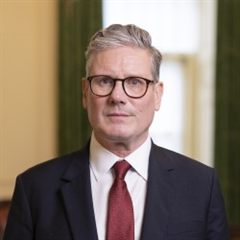
Prime Minister Keir Starmer stated that Andrew should testify if U.S. authorities renew requests for cooperation in Epstein-related inquiries. Members of Parliament also questioned whether he should remain a Counsellor of State, pointing to standards of public trust and judgment.
Concerns intensified after Andrew's correspondence with an alleged Chinese intelligence asset became public. Security commentators described the pattern as consistent with earlier warnings that Andrew was unusually susceptible to influence, prompting tighter internal controls on his public and diplomatic exposure.
Effects on Andrew's Family
Royal correspondents report that Princesses Beatrice and Eugenie of York have been advised to limit high-profile appearances to avoid collateral reputational damage. Sources say both are attempting to maintain charitable work while steering clear of politically sensitive events.
Insiders describe Andrew as lobbying privately to shield his daughters from fallout. Palace advisers, however, have resisted any steps that could be interpreted as rehabilitating Andrew indirectly through family visibility.
Virginia Giuffre's Final Year and Lingering Questions
Giuffre's death in 2025 prompted renewed scrutiny after authorities confirmed she left no valid will, placing her estate in legal limbo. Supporters pointed to sustained public backlash following her final statements as contributing to her emotional decline.
Her absence complicates ongoing assessments of Epstein-related claims, as she was central to multiple legal efforts. Commentators note that unresolved questions surrounding her allegations continue to shape public debate and future document reviews.
Giuffre's Posthumous Book Release
Giuffre's memoir, Nobody's Girl, reached bookstores months after her death, renewing attention to her allegations and personal history. Publishers noted the manuscript was largely completed before her final year, offering a chronological account of abuse, recruitment patterns linked to Epstein and the psychological toll of sustained public disbelief.
The book focused less on legal arguments and more on power imbalances, grooming dynamics and institutional indifference. Critics observed that the narrative framed Giuffre not only as an accuser but as a witness to a broader system of exploitation that extended beyond any single defendant.
The release also prompted renewed law enforcement and media interest after reports that U.K. police officers reviewed sections for potential new leads. While some cautioned that posthumous publication limits scrutiny and rebuttal, advocates argued the memoir is likely to shape how future Epstein-related disclosures are assessed in legal, historical and public contexts.
Epstein Files and Renewed Media Coverage
Newly released emails reignited scrutiny by showing Andrew remained in friendly contact with Epstein months after claiming he had cut ties. Journalists highlighted the timing of several messages, including reassurances exchanged after damaging press coverage, contradicting his Newsnight testimony.
Survivor advocates and legal analysts argue that the documents weaken previous royal narratives of estrangement. While not constituting criminal findings, they are increasingly cited as context in evaluating future disclosures tied to Epstein's network.
New Accuser and Latest Evidence Release
The latest DOJ files release on Jan. 30 has prompted fresh political pressure on Andrew, with Prime Minister Keir Starmer urging him to cooperate if asked to testify. The files include thousands of newly released images, pushing the issue back onto British front pages and widening scrutiny beyond previous document tranches.
A lawyer representing a second woman now claims she was sent by Epstein to Britain for sex with Andrew in 2010. Attorney Brad Edwards said the woman was in her 20s at the time and is considering civil litigation, describing the episode as part of a broader pattern of Epstein arranging access to young women for powerful men.
Newly released photos appear to show Andrew crouched over an unidentified, fully clothed woman with her face redacted. Additional disclosures also included emails suggesting Epstein offered to introduce Andrew to a 26-year-old Russian woman that same year.
February 2026 Arrest
On Feb. 19, Andrew was arrested on suspicion of misconduct in public office following allegations that he shared confidential government information while serving as a British trade envoy. Police detained him during a morning raid at Wood Farm on the Sandringham Estate and conducted searches in Norfolk and Berkshire. Officers concluded a multi-day search at Royal Lodge and also searched his current residence on the Sandringham estate.
Authorities said the investigation relates to disclosures from recently released Epstein files, and he has consistently denied wrongdoing.
After several hours in custody at Aylsham police station, Andrew was released under investigation. Thames Valley Police confirmed that searches in Norfolk had concluded, while inquiries continue. Under British law, suspects can be released while investigations proceed, and misconduct in public office carries a maximum sentence of life imprisonment.
King Charles III said he had learned of the arrest with "deepest concern" and stated that "the law must take its course," pledging full cooperation with authorities. Prince William and Catherine are understood to support the King's remarks, while political leaders reiterated that no one is above the law. Anti-monarchy group Republic claimed credit for prompting police action, and the arrest has intensified scrutiny of the royal family.
Trade Envoy File Release
Members of Parliament voted on Feb. 24 to approve the publication of confidential documents related to Andrew's appointment as U.K. trade envoy. The government backed the motion but said some material could be withheld to protect the ongoing police investigation. Critics said Parliament and the monarchy must be held accountable for how the role was handled.
The debate centered on transparency and scrutiny in senior public appointments. While focused on the trade envoy role, MPs linked the motion to wider concerns about oversight and influence. The vote marked a rare move to release previously confidential records connected to a senior royal.
Andrew and the Broader Epstein Network
Andrew's relationship with Epstein placed him inside a web of political, financial and intelligence-linked figures whose influence spanned the U.S., U.K., Israel, the Gulf states and China.
Investigative reporting and victim testimony — most notably from Maria Farmer — describe Epstein's circle as less a social constellation and more a structured system of access, favors and protection. Within that network, Andrew was described in press accounts as Epstein's "biggest trophy."
Documents, flight logs and early press reports complicate Andrew's official narrative. Sources indicate he may have met Epstein years earlier than the 1999 date publicly claimed, and logs place him at multiple Epstein-associated locations well beyond what Buckingham Palace acknowledged.
Analysts note that such patterns are characteristic of a broader ecosystem in which elite figures moved seamlessly between social, philanthropic and intelligence-adjacent spheres.
Elite Protection and Structural Impunity
Critical reporting argues that Andrew's trajectory reflects a broader pattern of institutional insulation within the British state. Parliamentary attempts to scrutinize his conduct were blocked, and commentators note the monarchy's constitutional position shielded him from accountability. Critics say this "royal privilege" blurs the line between monarchy and political power.
These outlets also highlight uneven responses by U.K. institutions — including police, the press and political bodies — to the Epstein revelations. They argue the deference shown to Andrew reflects a wider reluctance to expose elite corruption, especially where foreign ties, national security concerns or the monarchy's stability might be affected.
Intelligence Links and Geopolitical Crossroads
Multiple investigations into Epstein's network have pointed to intersections with intelligence services, noting the presence of figures tied to U.S., Israeli and British intelligence milieus. Although no evidence definitively places Andrew within these operational structures, analysts suggest his proximity to Maxwell — whose father had well-documented British and Israeli intelligence ties — situates him adjacent to a milieu where politics, espionage and blackmail often interlocked.
More recent reporting and U.K. government documents introduced another layer of risk: Andrew's communications with an alleged Chinese agent, Yang Tengbo, including Yang helping Andrew draft letters to President Xi Jinping. Experts framed this not as espionage in the traditional sense but as a continuation of poor judgment within circles where foreign governments actively cultivate compromised or isolated elites.
Documented Patterns vs. Alleged Covert Activity
Mainstream reporting supports a factual narrative of Andrew traveling on Epstein's planes, visiting his properties and participating in overlapping social networks with major political and financial figures. Other investigations suggest Epstein curated such relationships to entangle high-value individuals in a system of leverage, possible kompromat, or transactional loyalty.
While hard evidence for such claims remains limited, the pattern of secrecy, destroyed evidence, vanished surveillance footage, and sealed depositions has fueled sustained skepticism. Analysts note that ambiguity itself functions as a protective mechanism in elite networks, enabling plausible deniability while preventing full accountability.
Mandelson and the Epstein Network
Peter Mandelson, a senior Labour powerbroker and former Starmer-appointed ambassador to the U.S., came under scrutiny after reports showed he stayed at Jeffrey Epstein's Manhattan townhouse and kept in touch after the 2008 conviction, reportedly to seek Epstein's help on a proposed billion-dollar Middle East investment deal.
The controversy reignited in 2025 amid new Epstein file releases, triggering political backlash and Mandelson's removal as ambassador. Mandelson said he was misled about Epstein, but critics argued the scale of financial engagement suggested a relationship far beyond social contact.
Renewed Scrutiny
Early 2026 disclosures suggested Mandelson, under former Prime Minister Gordon Brown's government, lobbied on Epstein's behalf during debates over bankers' bonuses after the financial crisis. In one December 2009 exchange, Mandelson told Epstein he was "trying hard" to amend Treasury policy, appearing to discuss adjustments to the planned super-tax on bonus payouts.
The document release also contained evidence of financial transfers from Epstein to Mandelson and his partner, including a reported $50,000 payment in 2004 and £10,000 ($15,000-16,000) sent in 2009. The Cabinet Office referred material to police after identifying potentially market-sensitive government information.
Political Consequences
Amid mounting pressure, Mandelson announced he would step down from the House of Lords, as Starmer told Cabinet colleagues that the former ambassador had "let his country down," and ministers warned unanswered questions remain over the full extent of Mandelson's disclosures.
Arrest
Mandelson was arrested on Feb. 23 on suspicion of misconduct in public office, accused of passing confidential government information to Jeffrey Epstein during his time as business secretary. Detectives detained him at his London home and took him to a central London station for questioning. The arrest followed earlier police raids on properties in Camden and Wiltshire.
He was questioned for hours before being released on bail pending further investigation. The allegations stem from emails suggesting he may have shared details of sensitive policy measures before public announcement. Mandelson has denied wrongdoing, expressed regret over his association with Epstein and said the documents do not indicate criminal conduct.
Media Suppression
Several of the sources reviewing the media landscape point to a documented pattern of retracted stories, scrubbed reports and editorial hesitancy surrounding Andrew's association with Epstein. Early claims by journalists and victims like Maria Farmer describe attempts to publish incriminating details that were blocked or delayed by major outlets.
These accounts argue that protecting Andrew was part of a broader effort to shield high-level individuals across multiple governments. While mainstream outlets attribute editorial caution to legal risk, critics argue the pattern resembles coordinated suppression in the interest of maintaining geopolitical alliances and domestic stability.
Royal Entanglements With the Epstein Network
Investigators have argued that Andrew's presence within Epstein's orbit cannot be separated from the monarchy's search for global financial partnerships in the post–Cold War era. Epstein's network intersected with donors, private equity actors and sovereign wealth figures from the U.S., the Middle East and Asia. Andrew, who styled himself as an international trade envoy, cultivated relationships in similar environments, sometimes without formal oversight.
Reports allege that this ecosystem created conditions in which Andrew, already noted for poor judgment, became deeply entangled in circles where illicit behavior and elite privilege overlapped. Commentators argue this made him uniquely vulnerable.
Overview
Correction Notice



© 2026 Improve the News Foundation.
All rights reserved.
Version 7.6.4