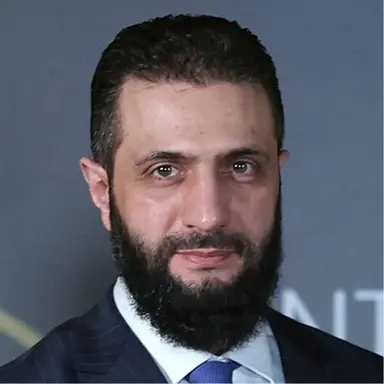
The Fall of Assad

The Spin
Anti-Assad narrative
Assad's fall was a victory against tyranny. In power, Bashar al-Assad brutally oppressed his own people and earned the ignominious exile he deserved. Despite this, significant challenges lie ahead for the people of Syria, who not only have to rebuild their country's economy and infrastructure but also reckon with the injustices of the past. How HTS approaches this will determine whether Syria can rise from the ashes or continue to decline.
Pro-Assad narrative
The collapse of the Assad government should have been of great concern to the entire international community. Blame for this calamity lies squarely with the machinations of Western powers and their regional allies, who were determined to continue their misadventures in the Middle East. As a result, not only was a lawful government toppled by insurgents, but Syria itself is now at the mercy of terrorists and extremists, which will only exacerbate instability in the region.
Cynical narrative
Those who cheered on the fall of the Assad government should have been careful for what they wished for. While no one will claim that Assad was a saint, far from it, it is also true that his fall, like other regimes in the past, could have long-term and unforeseen consequences. The fall of the Tsar, for example, led to the rise of the Soviet Union. With HTS's disreputable origins, there is no guarantee that a similar catastrophe cannot occur in Syria.
Background
The Assad family's rule in Syria began in 1970 when Hafez al-Assad, an Alawite military officer, seized power through a coup.
Before Hafez came to power, Syria had experienced decades of political instability due to a near-constant series of coups and countercoups following independence from France in the 1940s. After the breakup of the United Arab Republic led by Egypt's Gamal Abdul Nasser, the Ba'ath party seized control of Syria's government in 1963. The Ba'ath party, a left-wing movement that was popular with Syria's peasant and working classes, also appealed to religious minorities as it emphasized Arab identity over religious identity.
Hafez, a Ba'athist military officer hailing from a minority heterodox sect of Islam (Alawi) primarily concentrated in Syria's coastal regions, seized power in 1970, relying on the Alawite sect to stabilize his rule. Hafez's biggest challenge after coming to power was the Muslim Brotherhood uprising of the late 1970s and early 1980s, culminating in the 1982 Hama massacre, which occurred after Brotherhood militants took over the city. Most of the Brotherhood's leadership went into exile or was imprisoned, only re-emerging after the revolution in 2011.
Bashar's Rise to Power
Following Hafez's death in 2000, his son Bashar succeeded him. Bashar was initially seen as a potential political reformer, releasing political prisoners and allowing for more open political discourse, leading to what was called the "Damascus Spring." Bashar reversed the policy, however, after 1,000 intellectuals signed a petition demanding the government transition to a multiparty democracy in 2001.
Notably, economic reform abandoned the Soviet model implemented by his father and opened Syria to outside investment, resulting in increased economic development. The Alawites, whose loyalty was critical to his father's government, were drawn upon to staff positions in the security apparatus. When this was not feasible, Bashar turned to his own family, notably promoting his brother Maher and cousin Rami Makhlouf to key positions.
The Spin
Pro-Assad narrative
Bashar al-Assad's early rule marked a significant improvement in Syria's material conditions. Rather than wasting time tackling complex and, ultimately, unwanted constitutional questions, Bashar's government committed itself to strengthening the country's economy through its economic liberalization policies, while opposing Western imperialism abroad and terrorism at home. As a result, the Assad government was a model for what other Arab nations could become.
Anti-Assad narrative
Despite early hopes, Bashar al-Assad, like father, like son, proved to be just as repressive and ruthless as his predecessor. Instead of shepherding the country towards a democratic future, Bashar merely maintained Hafez Assad's corrupt practices by consolidating power around his family and promoting favorites. The regime's liberalization policies only benefited Bashar's cronies, leading to stark economic inequality that created the conditions for the 2011 revolution.
Prelude to Crisis
Several factors, including economic policies, drought, corruption and sectarianism, created the conditions for unrest in Syria by the late 2000s.
Syria's economy was predominantly state-controlled, with economic liberalization mainly benefiting businessmen in Damascus and Aleppo, where most of the economic growth was concentrated. Most of the populace in the rest of the country endured hardship. According to the U.N., in 2007, one-third of the population (roughly 6.7 million people) was below the poverty line, of which nearly 2.4 million were in extreme poverty. A further 30% of the population was estimated to be living just over the poverty line. By 2010, Syria's nominal GDP per capita was only $2,834, with high youth unemployment rates.
The study revealed that this level of poverty was unevenly distributed, with rural areas accounting for 56% of the extreme poverty recorded and 50% of the overall poor. The coastal region of the country had the lowest extreme poverty rate at 7.68%, while the northeastern region experienced the highest rate at 15.4%. In contrast, non-poor individuals disproportionately benefited from economic growth. The wealthiest 20% of Syrian society accounted for 40.3% of the total consumption expenditure, while only 8.8% was enjoyed by the bottom 20%.
Climate Stress and Rural Hardship
A severe drought from 2006 to 2010 exacerbated socio-economic tensions, particularly in rural areas. U.N.-linked reporting in 2010 warned that drought pushed an estimated two to three million Syrians into extreme poverty, prompting internal migration from the northeast, where much of Syria's agricultural land is concentrated. As many as 1.5 million migrants fled the drought to the cities, where overcrowding and limited facilities forced them to live in densely packed informal neighborhoods and slums.
The drought also degraded the country's food security. Wheat production in the country fell from nearly 5 million tonnes in 2006 to 2.1 million tonnes by 2008, while barley production collapsed from 1.2 million tonnes to 261,000 tonnes over the same period. As a consequence, food prices rose. Between 2007 and 2008, the prices of wheat, rice and feed reportedly more than doubled due to the drought.
Regional climate research highlighted the Mediterranean, including Syria, as a climate hotspot facing more frequent and intense droughts, with precipitation deficits documented across Syrian stations over five decades. These pressures intersected with fragile rural livelihoods, magnifying preexisting socio-economic tensions.
Separately, dams built by Turkey along the Euphrates River, which originates in Turkey and crosses through Syria to Iraq, further exacerbated drought, with Syria blaming Turkey for water shortages.
Sectarian Strife
Syrian society was also marked by significant ethnic and sectarian divisions. Syria's Alawite minority, which is related to Shia Islam, dominated government and policy-making decisions, with more than 80% of Alawites working for the state in some capacity, including in roles in the security forces, intelligence agencies and key government posts.
On the other hand, the role of Sunni Muslims, who are the majority in Syria, was heavily circumscribed in politics and the security services. The government banned organizations like the Muslim Brotherhood, which had launched a violent uprising against the government during Hafez's rule, with membership of the movement being punishable by death under Law 49. The government also suppressed religious activities, such as limiting mosque sermons.
The Assad government's economic agenda also widened rifts within the Sunni community, with its neoliberal policies benefitting the urban Sunni business community in Damascus and Aleppo by granting them access to privatization deals, foreign investment opportunities and state contracts. Rural Sunnis, meanwhile, suffered as a result of subsidy reductions and market liberalization that exacerbated poverty, unemployment and forced migration amid severe droughts.
Corruption and Abuse
Opposition forces in Syria claimed a key cause of the civil war was government corruption, as well as abuses by the security forces. Bashar al-Assad's economic reforms gave exclusive contracts and privatized assets to government-friendly elites. Rami Makhlouf, a maternal cousin of Bashar al-Assad, was a notorious example and was estimated to have dominated up to 60% of Syria's economy in 2008, including telecommunications (via Syriatel), oil, construction and banking, amassing billions through monopolies, intimidation of rivals and government-backed deals.
The security forces, meanwhile, were accused of committing widespread abuses. The Syrian state allegedly used the powers of the 1963 Emergency Law to suppress dissent through arbitrary arrests, incommunicado detentions, torture, enforced disappearances and extrajudicial killings. These acts primarily targeted political activists, journalists, human rights defenders, bloggers and Kurds, who make up around 10% of the population. In 2010, human rights observers estimated that there were between 2,500 and 3,000 political prisoners in the country in 2010.
Ignition
In 2011, the Arab Spring, a series of anti-government protests that originated in Tunisia in response to corruption and economic stagnation, spread across most of the Arab world.
In Syria, small-scale protests against the government began in February, calling for reform and standing in solidarity with protesters in other Arab countries. The security forces were able to keep these initial demonstrations under control until the situation escalated in the southern region of Daraa.
Daraa
In March 2011, 15 students were arrested and allegedly tortured in the southern Syrian city of Daraa for writing anti-government graffiti. This incident catalyzed further protests across the city and nearby towns. Initially, protesters demanded modest reforms rather than a change in government, but the government's forceful response, resulting in civilian deaths, rapidly escalated tensions.
Rights groups documented live fire and tear gas against protesters during the first week, with at least five dead by March 20 and dozens more in subsequent days. By late March, security forces used live ammunition in Daraa, Sanamein and Tafas, with at least 26 killed on March 25–26 and dozens in Latakia, as protests widened after Friday prayers. As funerals and marches multiplied, the authorities sealed Daraa and later conducted a siege marked by mass arrests and reports of wanton killing. While the authorities lifted the emergency law in April, security forces continued using live rounds and tear gas on demonstrators, according to activists and press accounts.
Escalation
In contrast, the government framed the protests as a Western-backed conspiracy that sought to undermine the Syrian state and break the country's ties to Iran, Hezbollah in Lebanon and Palestinian militant groups. Government officials and media personalities pointed to instances of violence among protesters, in particular deaths among the security forces, claiming that foreign powers were smuggling weapons into the country.
As the protests gained momentum, President Assad refused to offer substantial reforms and repeatedly denied facing a popular uprising. In parallel, Assad's rivals, both in the region and globally, began to escalate their actions against the government, with the United States placing additional sanctions on Syria starting in April 2011.
By September 2011, the conflict had evolved into armed rebellion, with organized militias regularly engaging government troops across Syria and the emergence of the Free Syrian Army (FSA), an umbrella group led by military defectors.
Civil War
The conflict that engulfed Syria quickly spiraled into a multi-party civil war, marked by rising extremism and foreign intervention.
Although the conflict initially began as a two-sided civil war, this dynamic quickly shifted to a far more complex landscape. Despite being initially led by the FSA, the opposition was incredibly fragmented, with thousands of autonomous and semi-autonomous militias forming throughout the country.
The FSA and its civilian counterpart, the Syrian National Coalition (SNC), failed to deliver significant material and diplomatic support, which, coupled with competing interests among the FSA militias, led to fighters drifting away from its authority and other opposition groups viewing it with disdain.
The government exacerbated the fragmentation by releasing hundreds of Islamist militants from prisons in mid-2011 and early 2012 in an attempt to undermine the rebellion, with some of these individuals going on to form groups such as Ahrar al-Sham, which espoused an explicit sectarian agenda.
By 2013, the war had devolved fully into a multi-faction conflict, with various groups with their own alternative governments and military forces. These included groups such as the Syrian Islamic Liberation Front, formed in September 2012, and the Kurdish People's Protection Units (YPG), established in July 2012.
Foreign Intervention
Regional and global powers quickly intervened as the situation in Syria spiraled into chaos. The governments of Turkey, Qatar, Saudi Arabia, Jordan and the West supported the opposition, with Iran and Russia backing the government. Gulf media, Qatar's Al Jazeera in particular, took a strong line against Assad, agitating in favor of the opposition.
By 2012, regular shipments of weapons were entering Syria to fuel the rebellion, with Qatar, Saudi Arabia, and Turkey being the most active in terms of support. The United States, which had called for Assad to step down in 2011, was also involved in these early weapon transfers, though the degree to which it supported the rebellion during this time is heavily contested. U.S. military support to anti-government fighters officially began in 2013 as part of Operation Timber Sycamore, though some argue that it began as early as 2011.
Extremism
The conflict served to facilitate the rise of extremist groups across Syria, the most notable of which were the al-Qaida-linked Nusra Front, led by Abu Mohammed al-Jolani (now known as Ahmed al-Sharaa) and the Islamic State of Iraq and Syria (ISIS), led by Abu Bakr al-Baghdadi. Initially, Nusra was the Islamic State of Iraq's branch in Syria, but the two groups came into conflict in 2013. By 2014, ISIS rebranded as the Islamic State (IS) and controlled almost all of northeast Syria and northern Iraq after launching offensives against Nusra, the rest of the Syrian rebels and the Iraqi army.
The group, which included tens of thousands of radicalized foreign fighters, became internationally infamous due to its public displays of extreme violence, such as beheadings, mass executions and genocidal ambitions. IS quickly spread to other parts of the Islamic world, with the group launching spectacular and bloody attacks in the West.
Direct Western Intervention
The dramatic rise of IS and its high-profile executions of multiple Western individuals, such as British aid worker David Haines and American journalist Steven Sotloff, prompted a Western response. The effort was spearheaded by the creation of the Global Coalition against Daesh (the acronym ISIS in Arabic) in September 2014, an alliance that grew to include 90 countries, the United States chief among them.
Operation Inherent Resolve, the coalition's military mission, mobilized significant Western assets to neutralize IS. From the beginning of the operation through to March 2019, the campaign conducted approximately 34,464 strikes in Syria. The pressure reduced IS's strength substantially, with the group reportedly losing over 80,000 fighters by 2017.
As a result of these efforts, IS lost 95% of its territory by December 2017, including its two largest possessions, Mosul and Raqqa. In March 2019, the U.S.-backed Syrian Democratic Forces (SDF), an alliance between the Kurdish YPG and anti-Assad armed groups, symbolically seized the last village in Syria under IS control, effectively putting an end to the group's existence as a proto-nation-state.
Turkey
Turkey, Syria's northern neighbor, changed its policy toward Syria as the crisis evolved, first providing rhetorical support for the opposition before moving toward military and humanitarian assistance. Following Russia's direct intervention in the conflict in 2015, Turkish goals became more limited.
As part of this support, Ankara helped establish and develop the Syrian National Army (SNA), an umbrella group of anti-government armed groups established under Turkish auspices in 2017. The formation was, in part, created to help Turkey counter the expansion of the Kurdish-led SDF, which it alleged was the Syrian branch of the Kurdistan Workers' Party (PKK), a Kurdish armed group that has fought the Turkish military since the 1980s.
Starting in 2016, Turkey began to conduct military operations in Syria in coordination with the groups that would eventually form the SNA. Operation Euphrates Shield (2016–2017) cleared IS from northern Aleppo and blocked Kurdish territorial gains; Operation Olive Branch (2018) captured Afrin from the SDF; and Operation Peace Spring (2019) cleared parts of the Syrian side of the Turkish border in northeast Syria.
Russia and Iran
Iran was the first foreign state to deploy its forces on the ground in Syria, sending advisors to Damascus in 2011. Iran supported Assad militarily and diplomatically, providing arms and logistical support for pro-government units. In 2013, Hezbollah, an Iranian-backed Shiite armed group and political party in Lebanon, and other Iranian-backed Shiite militias officially intervened in the conflict, though some analysts believe this intervention began in 2012 or earlier.
Likewise, Russia also provided support for the government, defending it at the U.N. and sending arms. In 2015, Russia directly intervened in the conflict, waging an air campaign, sending private military contractors such as the Wagner Group, and dispatching military attachés. Russian intervention turned the tide, at least for a while, with government forces largely pushing the opposition into a small strip of territory along the Turkish border in the northwest, with government forces controlling 26% of Syria in 2015, compared to roughly 70% by 2023.
Frozen Conflict
After almost a decade of non-stop fighting, the war froze in 2020, with the Assad government seemingly victorious.
A partial ceasefire brokered by Russia and Turkey in March 2020 halted major combat operations and stabilized the frontlines in northwest Syria. Additionally, after eight years of fighting, all sides were militarily exhausted and lacked the strength to break the deadlock.
Starting in 2022, the powers that had intervened on behalf of Assad began pulling back their forces, with Russia prioritizing the war in Ukraine while Iran reoriented its focus towards Israel following Hamas' Oct. 7, 2023, attack on the country and subsequent war.
Return to the Arab Fold
Additionally, as the government appeared increasingly stable, some countries began to reassess their relationship with Syria, which had become a pariah state in the Arab world. In 2023, the Arab League readmitted Syria, with Crown Prince Mohammed bin Salman notably embracing the Syrian president. The readmission was a diplomatic coup for the Assad government as it suggested that neighboring countries had effectively concluded Assad had won the war.
Some experts and individual politicians had already begun to come to such a conclusion as early as 2017, with the then Israeli Defense Minister Avigdor Lieberman claiming Assad was victorious in October of that year. Yet, the diplomatic turnabout from pariah state to Arab League member suggested that this viewpoint was becoming the basis for policy, in addition to opinion.
Government Weaknesses
Despite its superficial position of strength, the Assad government had critical weaknesses.
The Assad government suffered from severe structural weaknesses, which, by late 2024, left it in a precarious position. Even with the conflict decreasing in intensity, the Syrian Arab Army (SAA), key to the government's survival, was significantly weakened after 14 years of fighting and constant attrition. This fact led to crippling manpower and resource shortages, with the army suffering 93,000 fatalities, according to the Syrian Observatory for Human Rights. Additionally, desertions and defections, it is estimated, may have cost the SAA between 20,000 and 100,000 in the early stages of the war.
Morale in the services was also at an all-time low, with its ranks consisting mostly of conscripts — some forced to serve after arrest and torture — rather than willing volunteers. Corruption and sectarian favoritism, meanwhile, had reduced it to a "coalition of regular forces and allied militias" rather than a "cohesive force," according to the European Union Agency for Asylum. Corruption was so rampant that it was not uncommon for officers to accept bribes from enlisted men to avoid service. "Ghost soldiers," meanwhile, littered army payrolls, fictitious names designed to allow officers to collect extra paychecks for troops who did not exist.
Economic Woes
At the same time, the country's humanitarian and economic crises, rather than improving, worsened significantly. U.N. humanitarian chief Martin Griffiths reported in June 2023 that 90% of the Syrian population was living below the poverty line. This economic collapse occurred immediately after the Lebanese banking crisis of 2019, as Syria and its citizens were heavily reliant on Lebanon's financial sector, and the implementation of the Caesar sanctions, which further isolated Syria's economy from global markets. However, pro-opposition sources generally attribute the economic collapse to rampant mismanagement and corruption.
Inflation was high at 127% in 2023 and 58% in 2024, according to the World Bank, diminishing the purchasing power of wages that were already struggling to afford necessities. A study by the World Food Programme, for example, showed that the monthly minimum salary of 185,940 Syrian pounds ($21.76) set in August 2023 could only afford one-third of the essential foodstuffs needed to feed a Syrian family for a month.
Retreating Allies
Finally, in late 2024, the Assad government lacked what had previously ensured its continued survival: extensive Russian and Iranian support. Due to the war in Ukraine, Russia systematically withdrew its resources from Syria to allocate them to a more pressing front. The Russian deployment in Syria — including private military contractors, paramilitary groups and advisors — slumped from roughly 20,000 in 2017, according to the Syrian Observatory of Human Rights (SOHR), to 7,500 by 2024, according to BBC Russia.
At the same time, the war in Gaza shifted the attention of Iran and its proxies. Israeli airstrikes on Damascus caused Iranian military advisors to leave, while Hezbollah officers and fighters returned to Lebanon in anticipation of a conflict with Israel. Economic aid was also not forthcoming as the Russian economy was struggling under the weight of international sanctions, while Iran's economy was also in poor shape. In either case, neither country was in a position by late 2024 to flex its military or financial muscles to support Assad as they had been able to in the 2010s, leaving the government vulnerable.
Opposition Preparations
The opposition, meanwhile, readied itself under new leadership.
The opposition, led principally by Hayat Tahrir al-Sham (HTS), a Sunni Islamist political organization and paramilitary group, was highly organized and motivated. HTS originated from the al-Qaida-affiliated Nusra Front, which entered Syria under the orders of ISIS leader Abu Bakr al-Baghdadi. Its leader, Ahmed al-Sharaa, known by his nom de guerre Abu Mohammad al-Jolani, announced a break from al-Qaida in 2016, renaming the group Jabhat Fatah al-Sham. The organization evolved into HTS in January 2017 after merging with several other Islamist groups, forming a power base in northwest Syria.
Preparations
In a report published after the fall of Aleppo, the International Crisis Group reported that the HTS-led fighters had used the pause in fighting on the northwestern front since 2020 to consolidate their forces' strength, command and control, and general coordination, with the result that they were "more organized, more disciplined and better equipped than before."
The leader of HTS's military wing, Abu Hassan al-Hamawi, gave an interview to The Guardian that reinforced this view, as he not only revealed that HTS began making preparations for an offensive in 2023 but that it had also developed and been implementing a comprehensive military doctrine for much longer. Learning from their mistakes in 2019 and 2020, when government forces successfully pushed into HTS territory, the group identified an "absence of unified leadership and control over battle" as the opposition's "fundamental problem."
According to al-Hamawi, HTS utilized the pause in fighting to strengthen its political control over various opposition factions and consolidate them into a unified unit. Following this, HTS developed and implemented further doctrine designed to transform disparate rebel and jihadist militias into a disciplined fighting force by studying the Assad government's tactics and using them to create their own. HTS-aligned groups soon began creating dedicated military units, including a drone unit, and producing their equipment, such as weapons, vehicles and ammunition.
Turkish Support
HTS and its aligned forces also received additional foreign support during this time, principally from Turkey. Relations between the two initially began in 2018 through the Sochi Agreement with Russia, in which Turkey assumed a mediating role to coordinate ceasefires with HTS in Idlib province.
From there, the relationship deepened, with Turkey allegedly establishing a military academy in northern Syria in 2020 to produce trained officers and soldiers, similar to the two created by the SNA. That same year, Operation Spring Shield, a Turkish military intervention in Idlib province, helped safeguard HTS from a Russia-backed government offensive into the region.
In addition, analysts from the Foundation for Defense of Democracies have argued that there was "decent circumstantial evidence" to suggest Turkey provided the HTS-aligned fighters with logistical support as well as military hardware. Separately, Turkish Foreign Minister Hakan Fidan confirmed that Turkey and HTS had "excellent cooperation on sharing intelligence" in an interview following the fall of the Assad government.
November 2024 Offensive
The opposition offensive, codenamed "Deterrence of Aggression," began on Nov. 27, 2024, attacking government-held Aleppo.
Three days later, the city, which had been the backdrop of a bloody, protracted siege earlier in the conflict, fell to the opposition.
Collapse of the Army
Government forces, which had not expected the sudden opposition assault, fell apart. Low morale, especially among conscripts, coupled with poor wages, had undermined the combat readiness of its soldiers. In the face of determined attacks, many SAA personnel abandoned their posts, with many documented to have changed into civilian clothing to avoid identification after deserting.
Even an immediate salary increase for the army's conscripted forces ordered by Assad failed to convince drafted soldiers that the government's cause was worth fighting and potentially dying for.
Continued Advances and the Fall of Damascus
Following the rout of government forces in Aleppo, Syrian military units began withdrawing from eastern Syria toward Hama, the next big city between Aleppo and the capital Damascus. Though HTS and its allies managed to quickly enter the city, they were initially pushed back after a government counterattack. Fighting around Hama continued for several days, as government forces, which were in the process of disintegrating, tried to bolster the city's defenses.
Attempts to reinforce Hama were in vain, however, with anti-government forces surrounding and then capturing the city in its entirety on Dec. 5. Government forces, which, by this point, were in total disarray, began preparations for a last stand around Homs, though this too was in vain, as rebels captured the city with minimal fighting.
By this point, anti-Assad forces in the south that had lain dormant following a government offensive in 2018 reactivated, announcing that they would begin advancing on Damascus in coordination with HTS. Following the fall of Homs, HTS and its allies encountered little resistance as they pushed on toward their final objectives.
On Dec. 8, 2024, HTS entered Damascus, with Assad fleeing to Russia.
A New State
After seizing power, the HTS-led opposition set about creating a new government.
By the time Damascus fell, Assad had already fled the country and taken a plane to Moscow. Russian state media TASS reported that the decision to grant asylum to Bashar and his family was made personally by Russian President Vladimir Putin.
On the day of the Assad government's fall, the HTS-led opposition forces quickly formed a caretaker government to fill the power vacuum. The outgoing Ba'athist prime minister, Mohammad Ghazi al-Jalali, who had only been in the role for roughly three months, agreed to lead the fledgling government until replaced by Mohammed al-Bashir, who served as prime minister for the HTS-affiliated Syrian Salvation Government from January 2025 until the position was abolished in March 2025.
Consolidating Control
HTS began efforts to consolidate its military and political control into a post-Assad government, negotiating with other insurgent groups to support its endeavor. On Dec. 17, Ahmed al-Sharaa, no longer going by his nom de guerre Abu Mohammed al-Jolani, announced that the government would disband all armed groups and integrate them into the Ministry of Defense. On Dec. 24, Syrian authorities reported that some opposition groups had agreed to these demands. Kurdish-armed groups, including the powerful U.S.-backed SDF, did not attend this initial meeting, however.
The first months of 2025 saw the caretaker government develop further. On Jan. 29, 2025, al-Sharaa was appointed President of Syria for the transitional period during the Conference for Announcing the Victory of the Syrian Revolution, another diplomatic event that sought to bring together the various armed factions that had formed the coalition against the Assad government. Following the conference, the Syrian Interim Government (SIG) agreed to place itself at the disposal of the new government. In February, both the Syrian Negotiation Commission and the Syrian National Coalition announced that they would dissolve into the new authority as well.
Constitutional Reform
On March 13, Syria's new authorities implemented the Constitutional Declaration of the Syrian Arab Republic, establishing Syria's law for the five years from 2025 to 2030. The constitution established a presidential system with legislative power invested in a People's Assembly, while executive authority lies with the president and the ministers, whom the president appoints. The caretaker government was then dissolved on March 29, 2025, in favor of a new transitional government.
SDF Negotiations
On March 10, 2025, the caretaker government successfully negotiated with the SDF to integrate its resources into state institutions.
The agreement centered on eight specific points:
The guarantee of political rights for all Syrians, regardless of religion or ethnicity.
Recognition of Kurdish society as a component of Syria with citizenship and constitutional rights.
A national ceasefire.
The integration of SDF civil and military institutions into the state.
The right of return and protection for displaced Syrians.
Support for the state against pro-Assad remnants and other threats.
A rejection of divisive politics and hate speech.
The creation of committees to implement the agreement by the end of 2025.
Troubled Implementation
Implementing the agreement, however, has proven challenging. While initial progress was made, including the partial reintegration of Aleppo's Sheikh Maqsoud and Ashrafieh neighborhoods and prisoner exchanges, implementation soon stalled over core disputes.
Whereas the SDF seeks to preserve its organizational cohesion and wants a decentralized structure of governance, Damascus insists on full central control of the country, a unified army structure and state deployments across northeast Syria. Additionally, some SDF-aligned Syrian Kurdish groups have also attacked the government's interim constitution as insufficient for protecting the rights and minority representation of the Syrian Kurds.
Skirmishes
These points of contention transformed into tensions on the ground along the line of contact between the two sides, which gave way to intense clashes. At the Tishreen Dam in eastern Aleppo, a critical piece of infrastructure in the region, transitional government and SDF forces clashed repeatedly, exchanging artillery and drone strikes, complicating what originally was supposed to have been a swift handover of control from the SDF to the transitional government in April.
SDF and government forces also engaged one another in Deir ez-Zor, where exchanges of artillery and small-arms fire erupted in August, October and November, including attacks on positions in towns like Diban, Abu Hamam, and Maadan, with both sides accusing each other of initiating the violence.
In Aleppo, skirmishes broke out in areas such as Deir Hafer, al-Khafsah, and the Kurdish neighborhoods of Sheikh Maqsoud and Ashrafieh, escalating in August and October with reported casualties among soldiers and civilians.
Continued Talks
Fighting in the latter resulted in a comprehensive ceasefire agreement on Oct. 7, 2025, which covered "frontlines and military deployment points in northern and northeastern Syria," according to Syrian Defense Minister Murhaf Abu Qasra.
Talks between the two saw initial momentum with the commander of the SDF, Mazloum Abdi, visiting Damascus to discuss integration mechanisms, including a preliminary understanding on incorporating SDF forces into the national army while preserving some unit cohesion and addressing decentralization principles.
However, progress slowed in November amid mutual accusations of delays, entering a "sensitive phase" with no breakthroughs reported. By mid-December 2025, negotiations intensified again as the informal year-end deadline approached, with Damascus reportedly proposing that the SDF reorganize into three divisions in exchange for concessions concerning command and territorial access. Core disputes nevertheless persisted, with state media and the SDF confirming on Jan. 4, 2026, that talks had failed to progress concerning military integration, though both sides committed to holding further discussions.
Tensions in Aleppo, Northwestern Offensive and a New Agreement
Following the failure of talks in early January, clashes between the Syrian government and SDF forces again erupted in Aleppo on Jan. 6, 2026, after the SDF allegedly targeted a Syrian army vehicle on the Castello Road north of Aleppo city, killing one soldier and injuring four others from the 72nd Division, according to the SOHR.
The incident sparked government retaliation in the Kurdish-held neighborhoods of Sheikh Maqsoud and Ashrafiyeh, with the U.N. estimating that approximately 148,000 people were displaced and at least 23 people killed in the fighting that followed between Jan. 6 and 11. The battle ended when a U.S.-brokered ceasefire went into effect on Jan. 11, 2026, with the SDF agreeing to withdraw from the city altogether, after Kurdish forces rejected a previous ceasefire attempt by the Syrian government on Jan. 9.
Tensions escalated once more when the Syrian government launched an offensive into SDF-controlled areas of northwestern Syria on Jan. 13, 2026, initially aimed at removing SDF fighters in the area east of Aleppo and west of the Euphrates River. The government quickly reinforced the operation with additional forces, including reports that Damascus had mobilized the 50th Division, which had been based on Syria's coast.
Following these advances, the Syrian government announced a 14-point ceasefire on Jan. 18, 2026, under which the Syrian government would take control of the al-Hasakah, Deir ez-Zor and Raqqa governorates and the SDF would be integrated into the Syrian Ministries of Defense and Interior on an individual basis. While the deal was signed by Abdi as well as al-Sharaa, a meeting to consolidate the ceasefire between the two leaders reportedly did not go well, with Abdi allegedly unsatisfied with the terms.
In the days following the meeting, Arab units of the SDF defected en masse, with the SDF rapidly losing its territory in central Syria. By Jan. 21, Damascus had taken control of Raqqa and Deir ez-Zor, with its forces digging in outside Hasakeh. Another ceasefire was agreed to, with the SDF agreeing at the end of January to integrate into the Syrian state.
The most recent agreement stipulates that transitional government fighters will pull back from the lines of contact, with Interior Ministry security forces deploying to Kurdish-majority cities and towns under SDF control. Kurds have also been given rights stripped from them when the Ba'ath party took power, and Kurdish fighters will be integrated into the Syrian state's security forces. Autonomy for Syria's Kurdish regions, however, was not part of the deal. U.S. envoy Tom Barrack said the agreement is "a profound and historic milestone in Syria's journey toward national reconciliation, unity, and enduring stability."
International Recognition and Reactions
Following the fall of Bashar al-Assad's government, Western nations progressively lifted economic sanctions on Syria to support the transitional government's reconstruction efforts and economic recovery, while maintaining targeted measures against Assad, his associates, alleged human rights abusers and certain security-related activities.
The United States issued initial relief through Treasury's General License 25 in May 2025, expanding authorizations for transactions, followed by Trump's Executive Order on June 30, 2025, revoking the Syria sanctions program, effective July 1, 2025, removing hundreds of individuals and entities from the SDN List and terminating the underlying national emergency.
As part of the Department of Defense Appropriations Act, 2026, signed into law by U.S. President Donald Trump on December 18, 2025, the U.S. permanently repealed the Caesar Syria Civilian Protection Act of 2019.
The EU suspended key sectoral sanctions (energy, transport, finance) in February 2025, then formally lifted nearly all economic sanctions on May 28, 2025, while extending listings on Assad-linked figures until June 2026 and adding new measures against alleged human rights violators in the country. The EU also maintains sanctions on "security grounds," which include a weapons embargo, export restrictions on dual-use goods and a trading ban on goods forming part of Syria's cultural heritage.
The U.K. first amended its Syria sanctions regime in March 2025, lifting asset freezes on 24 Syrian entities, including the Central Bank of Syria, Syrian Arab Airlines and several energy companies. The following month, the U.K. revoked sectoral restrictions on Syrian finance, energy and transport, centered on aviation. Similar to the EU, the U.K. maintains several sanctions, including on the import of military equipment from Syria.
U.S. Rapprochement
Following the fall of Assad, the U.S. government began to reestablish relations with Syria, with then Secretary of State Antony Blinken emphasizing that Washington would recognize and support a Syrian government in December 2024, should it meet its conditions, including producing an inclusive and representative government, denying the use of Syria as a base for terrorism and respect the rights of all Syrians, among others. Following successful talks between U.S. and HTS officials, the former removed the long-standing $10 million bounty on Ahmed al-Sharaa.
The Trump Administration continued this policy, outlining its own conditions of support for the Syrian state to preserve the country's unity and territorial integrity and adopt a protective and inclusive approach toward all Syrian communities. While no formal recognition was offered, the United States began to share intelligence with the interim government to counter IS by Jan. 24, 2025, which purportedly foiled a planned attack on a religious shrine outside Damascus.
U.S. support for the Syrian state continued, with the country reportedly playing a key role in facilitating and supporting the March 10 agreement between the transitional government and SDF. In this capacity, the U.S. mediated the talks, shuttling messages between the parties and applying diplomatic pressure to hasten the signing amid escalating tensions, including rising sectarian violence.
This diplomatic support was followed by a meeting between Trump and Ahmed al-Sharaa on May 14 during the former's visit to Riyadh to lift sanctions on Syria, the first U.S.-Syrian leadership encounter in 25 years, and the raising of the U.S. flag at its Damascus residence on May 29, signaling the renormalization of relations between the two countries.
Soon after, on July 8, the United States revoked HTS's designation as a Foreign Terrorist Organization. In November, Sharaa visited the White House. Following this, the United States removed sanctions against the Syrian president and Syria became the 90th member of the Global Coalition against IS.
Turkey
Turkey quickly normalized ties with the transitional government under Ahmed al-Sharaa by reopening its embassy in Damascus on Dec. 14, 2024. Later in the month, Turkey dispatched its foreign minister, Hakan Fidan, to Damascus. In 2025, the Turkish government hosted two visits by Sharaa to discuss security, defense and economic cooperation, before agreeing on a military agreement with Syria in August.
Turkish relations with post-Assad Syria have also encompassed a deepening of economic ties between the two nations. By late 2025, Turkish companies had secured $11 billion deals to build infrastructure in Syria, including a $4 billion expansion of Damascus International Airport. In this context, bilateral trade has surged by 54.1% to over $3 billion in the 12 months to December 2025.
Gulf States
The Gulf states likewise rapidly normalized relations with post-Assad Syria, viewing the transitional government under Sharaa as an opportunity to counter Iranian influence, promote stability and invest in reconstruction while advocating for inclusivity and sanctions relief.
Qatar's Emir notably became the first head of state to visit Syria following the fall of the Assad government through a diplomatic trip in January 2025, after reopening its embassy in Damascus in December. In addition, Qatar has committed to large reconstruction programs, with a consortium led by Qatar-based UCC Holdings securing a $7 billion project to build four gas-turbine power plants in Syria.
Saudi Arabia, meanwhile, has pledged substantial economic support for the new government, including $2.9 billion in infrastructure payments as part of a wider package. Together with Qatar, Saudi Arabia has also signed up to an initiative to fund public services in Syria, which will partially cover the costs of paying public sector salaries.
The UAE welcomed Syrian Foreign Minister Asaad al-Shaibani in January 2025 to discuss bilateral relations after talks he had with the UAE Foreign Minister the previous month. In April, Sharaa followed this with a state visit to the UAE, where he met UAE President Sheikh Mohammed bin Zayed Al Nahyan. Shortly after, the UAE announced that it would resume flights to Damascus, with the first Emirates flights leaving for Damascus on July 17, 2025.
Israel
Though Israel provided support for anti-Assad fighters in the south, including the Nusra Front, Israel has expressed deep skepticism regarding Sharaa's jihadist background and the potential for HTS to foster threats along its border. As anti-government fighters entered Damascus, Israel swiftly seized the U.N.-monitored buffer zone in the Golan Heights and advanced into southern Syrian territory, establishing military posts and demanding the demilitarization of three southern provinces to prevent any buildup of hostile forces. Israel also conducted hundreds of airstrikes in Syria to neutralize the country's military capabilities.
By 2025, indirect talks mediated by the U.S. led to some de-escalation, including intelligence sharing and discussions on a security pact, with al-Sharaa emphasizing Syria's commitment to non-aggression toward Israel while demanding a withdrawal from occupied territory.
A key aspect of Israel's intervention involved its support for anti-government Druze fighters, particularly during deadly clashes in Suweida in July 2025 between Druze factions and Bedouin tribes backed by government forces, which killed hundreds and displaced thousands. Israel launched airstrikes on Syrian military targets, including near Damascus, citing a moral obligation to protect the Druze, as there are many Druze in Israel.
Iran
Iran, by contrast, adopted a cautious and mostly adversarial approach to relations with post-Assad Syria, viewing the transitional government under Sharaa as a strategic setback that disrupts its "Axis of Resistance" and land corridor to Hezbollah, while publicly framing Assad's fall as a U.S.-Israeli conspiracy.
Tehran maintained rhetorical calls for Syrian stability and dialogue but saw its influence sharply curtailed, with the new Syrian authorities realigning Syria toward Western and Gulf partners. While limited pragmatic re-engagement occurred, relations remained frozen at high levels, with vacant ambassador posts and no major visits.
Sectarian Violence
Despite toppling the Assad government and the new government's progress, violence and fighting have continued across Syria, especially in the country's coastal regions, where anti-transitional government Alawite groups — such as the Syrian Popular Resistance — have clashed with forces of the incumbent Syrian transitional government.
On March 6, 2025, these clashes escalated significantly when anti-government gunmen ambushed military personnel in and around Latakia, killing 16 members of the security forces. The interim government responded by mobilizing tens of thousands of fighters, which it deployed to the region to remove "regime remnants." During this security operation, there were reports of widespread abuse by fighters aligned with the transitional government against Syrian Alawites.
According to Human Rights Watch, government fighters swept through Alawi-majority neighborhoods along the coast, reportedly interrogating residents about their religious sects, before looting their valuables, torching their homes and carrying out executions if they were Alawites. The violence was particularly prevalent in the Latakia Governorate, where the SOHR reported that at least 853 civilians were killed between March 6 and March 27, 2025.
In response to the killings, Sharaa denied any responsibility and vowed to "hold accountable, firmly and without leniency, anyone who is involved in the bloodshed of civilians or harming our people, who overstepped the powers of the state or exploits authority to achieve his own ends." He also announced the formation of an independent committee to investigate the killings to identify those responsible and publish a report within 30 days.
Though delayed, the committee's report was published in July 2025, concluding that at least 1,426 people were killed in the violence, though the SOHR puts the figure at over 1,600 in total. The report also identified 298 individuals by name, along with 265 anti-government militants, suspected of committing human rights violations and war crimes. These suspects have been referred by the authorities for prosecution, with the first trials scheduled for November 2025. Other possible perpetrators, however, have seemingly been ignored.
Druze
Meanwhile, sectarian violence has continued concerning other groups, such as the Druze, a religious minority in Syria who follow an offshoot of Islam. In late April and early May 2025, clashes in Damascus and southern Syria led to the deaths of more than 100 Druze after a doctored video was circulated portraying a Druze man mocking the Prophet Mohammed, which Druze leaders said was fabricated.
In July 2025, the violence intensified in southern Syria after Bedouin armed groups kidnapped a Druze trader along the Damascus-Suweida highway on July 11 and assaulted him. The incident sparked immediate retaliatory abductions by Druze factions who detained several Bedouins in response, escalating into widespread armed clashes between the two communities that, as of August, killed at least 1,653 people in the region, according to SOHR.
An initial ceasefire was first announced on July 15, 2025, after the transitional government deployed forces and reached an agreement with local Druze notables. The understanding quickly broke down amid accusations of violations and Israeli airstrikes, which began on July 13, ostensibly to protect the Druze minority.
A more comprehensive truce was declared on July 19–20, 2025, sponsored in part by the United States and Jordan, involving the withdrawal of Bedouin fighters from Suweida city, the evacuation of trapped civilians, prisoner exchanges, and government security deployments, which halted major fighting by late July.
The ceasefire, however, has remained fragile and has been repeatedly violated since, with sporadic clashes reported, often tied to ongoing disputes over the ceasefire's implementation and issues of local control. The government has also moved to blockade Suweida.
Christians
By comparison, incidents targeting Christians have been less prolific. In mid-2025, however, there was an uptick in sectarian violence, with a suicide bombing at a Damascus church killing 25 people and injuring 63 in June.
The following month, Islamist groups perpetrating kidnappings, assaults on church leaders and forced conversions in areas under fragmented control, particularly in northern and eastern Syria held by Turkish-backed forces or HTS affiliates, resulted in dozens of deaths and heightened risks for converts from Muslim backgrounds.
Alternative Theories
The Syrian Civil War and the fall of Assad have been highly controversial since the very beginning of the crisis in 2011.
One of the first major controversies of the war was the Ghouta chemical attacks. On Aug. 21, 2013, a chemical attack took place in the Damascus suburb of Ghouta, held by opposition forces at the time, using sarin gas — a nerve agent. Estimated figures for the death toll vary, but range anywhere from 281 to 1,729 people, including civilians.
Following a U.N. investigation, which concluded that surface-to-surface rockets were deployed in the attack, responsibility for the incident was primarily attributed to the Syrian government, with the United States, France and HRW, among others, concluding that only the Assad government possessed the sarin stockpiles, delivery systems and organizational structure to carry out the attack.
However, some figures attribute the responsibility for the attack to the opposition. Journalist Aaron Maté has prominently advocated for the rebel-perpetrated theory, arguing that U.S. intelligence concealed evidence of the Nusra Front's sarin production capabilities and that open-source studies, such as a 2021 Rootclaim analysis using Bayesian modeling, conclusively show how the opposition forces staged the attack with sarin obtained from their own sources to cross Obama's "red line" and facilitate foreign intervention. Maté and others have also pointed to whistleblower accounts alleging that an international investigation into chemical weapons attacks in Syria altered the original findings of investigators.
The Grayzone, an independent news outlet where Maté contributes, has echoed and amplified this narrative, publishing pieces claiming British intelligence manipulated evidence to blame Assad, citing leaked documents as well as the same Rootclaim study to assert that insurgents executed the "red line" attack as a false flag.
Pipeline Theory
Pro-Assad voices claimed during the war that the uprising in Syria was a "color revolution" and the resulting civil war was initiated by pro-Western and Gulf interests. The "pipeline theory" posits that Western powers, Qatar and Sunni allies plotted to overthrow President Assad after he rejected a 2009 proposal for a natural gas pipeline from Qatar's North Field through Saudi Arabia, Jordan, Syria, and Turkey to Europe, which would have reduced the continent's reliance on Russian gas. Assad instead approved a $10 billion deal with Iran and Iraq to build an alternate pipeline by 2016.
As a result, supporters of the theory claim that these powers funneled weapons and funds into the country to foment an uprising. Proponents of the idea, such as Robert F. Kennedy Jr., have cited U.S. support for Syrian opposition groups as early as 2006 as evidence for their claims, which stem from declassified diplomatic cables released by WikiLeaks in 2011. The cables revealed that the U.S. State Department had secretly funded Syrian dissidents, civil society groups and media outlets under the Bush administration, continuing under the Obama era.
Specific evidence includes U.S. allocations of up to $12 million between 2005 and 2010 to opposition initiatives, such as the London-based satellite TV channel Barada TV, which broadcast anti-government programming into Syria to promote dissent and civil unrest. Cables dating to 2009 from the U.S. Embassy in Damascus also detailed concerns about the Assad government discovering these funds, which it stated would perceive the funding as "tantamount to supporting regime change." The theory frames these efforts as early covert operations that escalated into arming rebels by 2011-2012.
Western Intervention in December 2024
The sudden collapse of the Syrian government in December 2024 has given rise to numerous theories, including that the United States and Israel played a covert role in supporting the HTS offensive. In the immediate aftermath of the Assad government's collapse, Iranian and "axis of resistance" officials claimed that the events were a result of joint American-Israel operations, with Iranian Supreme Leader Ali Khamenei explicitly placing blame on an "American and Zionist plan" on Dec. 11, 2024.
This grand strategy reportedly entails destabilizing the region to allow the United States and Israel to further their respective goals. Khamenei suggested that "some" of the aggressors — presumably in reference to Israel and Turkey — seek to "occupy land in northern or southern Syria, while America aims to solidify its foothold in the region."
While Iran has failed to provide substantive evidence to support its claims, reports emerged in late December 2024 that the United States, at least, may have had some involvement in the offensive. According to The Telegraph, fighters in the U.S.-trained Revolutionary Commando Army (RCA) claimed that HTS may have been supported by the United States in its attack, with American special forces allegedly aware in advance of its plans for November and issuing RCA orders that assisted HTS's offensive.
Overview