The Sept. 11, 2001 Attacks
Overview
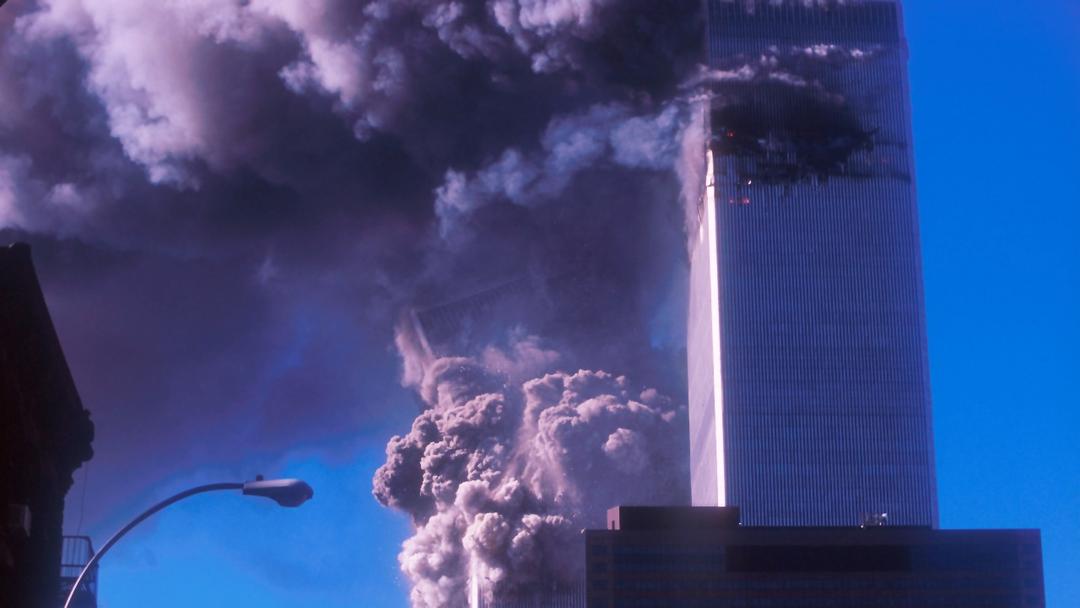
- On Sept. 11, 2001, coordinated terrorist attacks struck the United States, killing 2,977 people. According to the 9/11 Memorial & Museum, 2,753 died at the World Trade Center, 184 at the Pentagon, and 40 on United Flight 93 in Shanksville, Pennsylvania. Those killed were citizens of 90 different countries.
- In its 2004 report, the 9/11 Commission concluded that the attacks were carried out by 19 al-Qaida members, who hijacked four airliners that day, striking the World Trade Center (WTC) — causing both Twin Towers to collapse — and the Pentagon, with United Flight 93 crashing in Pennsylvania after a passenger revolt.
- The National Institute of Standards and Technology's (NIST) final reports on the Twin Towers in 2005 and WTC 7 in 2008 attributed the collapses to impact damage and fire-induced structural failure. Separate reports by the National Transportation Safety Board (NTSB) on United Flight 93 in 2002 and the American Society of Civil Engineers (ASCE) on the Pentagon in 2003 likewise found the destruction resulted from aircraft impact.
The Spin
Pro-establishment narrative
9/11 was a catastrophic terrorist attack by al-Qaida, a jihadist network born from the Afghan-Soviet war and fueled by anti-American ideology. Under Osama bin Laden, it planned and executed the deadliest assault on U.S. soil using hijacked planes to strike the World Trade Center, Pentagon, and a failed fourth target. The collapses resulted from impact and fire damage. Systemic intelligence failures — silos, poor data-sharing, and missed warnings — allowed it to succeed despite known threats. The 9/11 Commission exposed these flaws and drove reforms in security, intelligence and counterterrorism.
Narrative B
9/11 was a devastating attack by al-Qaida that laid bare U.S. government failures in intelligence and counterterrorism preparedness. Inept agencies, fragmented data-sharing, and ignored warnings let 19 hijackers execute the deadliest assault on U.S. soil. The Bush administration’s overreaching response — the PATRIOT Act’s sweeping surveillance, the baseless Iraq invasion peddled on WMD falsehoods, and the endless Afghanistan war — compounded the tragedy, trading targeted justice for unchecked power, global resentment, and a bloated security state that failed to make Americans safer.
Establishment-critical narrative
The official narrative of 9/11 is a lie. Rather than a lone terrorist success story, it was — at best — a deeply flawed event shrouded in deception. The physics of the building collapses, Pentagon damage, and Flight 93 debris contradict fire and impact alone. Intelligence agencies tracked hijackers yet blocked action. The Commission whitewashed failures, hid evidence, and pushed a narrative justifying war and surveillance. The gaps and contradictions in the official story warrant rigorous, good-faith scrutiny — questions that deserve further investigation instead of continued dismissal.
Cynical narrative
9/11 was unequivocally an inside job — either a staged provocation or willful inaction despite foreknowledge by powerful U.S. factions to ignite endless war, expand control and enrich elites. The towers were demolished, the Pentagon hit by a missile, Flight 93 shot down — all masked as al-Qaida's work. Drills ran cover, warnings were ignored, and foreknowledge cashed in via markets and insurance. It delivered the "new Pearl Harbor" needed for Iraq, the PATRIOT Act and a trillion-dollar security empire. The real enemy was embedded within, sacrificing 3,000 lives to remake the world in their image.
The Rise of al-Qaida and bin Laden
The Soviet-Afghan War (1979–1989) saw the United States, Saudi Arabia and Pakistan channel an estimated $3–6 billion through Pakistan's Inter-Services Intelligence (ISI) to Afghan mujahideen groups.
This infrastructure facilitated several thousand Arab volunteers — known as "Afghan Arabs" — from countries like Saudi Arabia, Egypt, Yemen and Algeria to fight alongside Afghan mujahideen against Soviet forces, though the role they played and the impact they had on the conflict has been debated.
Osama bin Laden, scion of Saudi Arabia's wealthiest construction family, arrived in Peshawar by 1984 and co-founded Maktab al-Khidamat (MAK) with Abdullah Azzam to recruit, finance and support these fighters using private Gulf donations. Declassified records indicate CIA aid was routed exclusively to Afghan commanders via the ISI, with no direct funding to Arab volunteers, though the shared logistics and infrastructure inadvertently facilitated networks later repurposed by bin Laden.
Al-Qaida was formally established in 1988 to pursue larger goals after the Soviet withdrawal.
After the Soviet withdrawal in 1989, U.S. covert support to Afghan factions tapered off by 1991, as Washington shifted its focus to deploying troops to Saudi Arabia at the Saudi government's request to further deter Iraq after the country invaded Kuwait in 1990.
Bin Laden's Relocation, Taliban Alliance and Escalation (1991–1998)
After opposing U.S. troops in Saudi Arabia during the 1991 Gulf War, bin Laden was stripped of citizenship and relocated to Sudan from 1991 to 1996, investing in infrastructure while allegedly training militants. U.S. and Saudi pressure forced his expulsion in May 1996, with him returning to Afghanistan under Taliban protection.
In August 1996, bin Laden issued a "Declaration of War" against the United States, followed by the February 1998 "World Islamic Front" fatwa calling for attacks on American civilians worldwide. Al-Qaida affiliates were later linked by U.S. authorities to the February 1993 World Trade Center bombing, the August 1998 embassy bombings in Kenya and Tanzania and the October 2000 USS Cole attack.
CIA Tracking and Neutralization Efforts (1996–2001)
The CIA created Alec Station in January 1996 to focus exclusively on bin Laden, tracking him via satellite, paid tribal assets and liaison services. In 1998, the CIA was formally granted the authority to kill or capture bin Laden.
Between 1998 and 2001, the Agency reportedly developed at least ten separate plans to capture or kill bin Laden — including armed raids on the Tarnak Farms training compound (1998–1999), cruise-missile or AC-130 strikes in Kandahar (1999) and armed Predator drones approved in principle after the USS Cole attack.
All proposals were ultimately rejected or deferred by CIA leadership and the Clinton and early Bush administrations allegedly because of legal constraints, risk of civilian casualties, unreliable intelligence or concerns over diplomatic fallout with Pakistan and Afghanistan.
Escalating Threat Assessments (2000–2001)
By 2000, CIA Director George Tenet had declared the Agency "at war" with al-Qaida internally, and intelligence reports described bin Laden as an imminent and existential threat to the U.S. homeland. Throughout the summer of 2001, the volume of chatter reached levels Tenet later called "blinking red," with repeated warnings of a spectacular attack.
The Aug. 6, 2001 Presidential Daily Brief (PBD), titled "Bin Ladin Determined to Strike in US," explicitly referenced bin Laden's intent, historical patterns and possible hijackings.
No lethal operation, however, was attempted against bin Laden before 9/11.
The Spin
Pro-establishment narrative
The CIA's pre-9/11 pursuit of bin Laden was extensive but bounded by real-world constraints. It tracked bin Laden for years through informants, Afghan allies and surveillance flights. However, kill/capture proposals like the 1998 Tarnak Farms raid and 1999 Kandahar strike stalled over legal bans, collateral risks and shaky intel. By 2000, unarmed Predator missions appeared to spot a figure assessed as bin Laden, yet arming the drone lagged amid policy and technical hurdles. The CIA's failure to kill bin Laden before 9/11 can ultimately be attributed to institutional caution and bureaucratic limits.
Establishment-critical narrative
The CIA's failure to kill bin Laden before 9/11 is indefensible. Alec Station had at least ten golden opportunities from 1997 to 1999 — including a fully rehearsed Tarnak Farms raid and multiple cruise-missile/AC-130 strikes in Kandahar — yet all were canceled supposedly over minor collateral risks, legal doubts or fear of bad press. After bin Laden ordered the 2000 USS Cole bombing, neither Clinton nor Bush authorized lethal action. Armed Predators were ready by summer 2001 but never used. The pre-9/11 failure by the CIA to kill bin Laden was, at minimum, unforgivable inaction and, at worst, deliberate negligence.
Narrative C
The CIA purposefully created al-Qaida as part of the program to arm the Afghan mujahideen. Indeed, the U.S. policy of sending billions of weapons into Afghanistan clearly created the conditions for al-Qaida's rise, and officials like Hillary Clinton have effectively admitted that al-Qaida has served U.S. interests.
Hijackers
Records from the Federal Aviation Administration (FAA) and the North American Aerospace Defense Command (NORAD) establish that on the morning of Sept. 11, 2001, four domestic flights were hijacked shortly after takeoff from Boston Logan, Washington Dulles and Newark Liberty airports by 19 men identified as al-Qaida operatives.
American Airlines Flight 11 (Boston, 7:59 a.m.) was seized around 8:15 a.m., United Airlines Flight 175 (Boston, 8:14 a.m.) around 8:44 a.m., American Airlines Flight 77 (Dulles, 8:20 a.m.) around 8:53 a.m., and United Airlines Flight 93 (Newark, 8:42 a.m., delayed) around 9:30 a.m.
Cockpit recordings and NTSB studies document that the hijackers used box-cutters, knives and, in some instances, pepper spray or bomb threats to overpower crews and gain cockpit access.
Hijackers' Entry, Visas and U.S. Flight Training (2000–2001)
According to the 9/11 Commission's findings, of the 19 individuals identified as hijackers, 15 were Saudi nationals, with the others from the UAE, Egypt and Lebanon. Between January 2000 and June 2001, all reportedly entered the United States on valid tourist or business visas, several of which included inaccuracies or omissions not flagged by the State Department's consular lookout system.
Four hijackers — Mohamed Atta, Marwan al-Shehhi, Ziad Jarrah, and Hani Hanjour — received flight training at schools in Florida, Arizona and Minnesota. The remaining 15 did not train as pilots.
The 9/11 Commission's Terrorist Travel Monograph found no evidence the hijackers triggered watchlist hits upon entry into the United States despite prior intelligence associations for some.
Key Intelligence Warnings and Unresolved Leads (2000–2001)
From January 2000, the CIA tracked future hijackers Khalid al-Mihdhar and Nawaf al-Hazmi from a Yemen communications hub through the Kuala Lumpur summit, photographed Mihdhar's U.S. visa in Dubai and learned of their Jan. 15, 2000 arrival in Los Angeles, yet did not place them on watchlists or notify the FBI until August 2001.
Former counterterrorism coordinator Richard Clarke and FBI agent Mark Rossini have alleged the Agency deliberately withheld the information to protect recruitment efforts to turn Mihdhar and al-Hazmi into assets inside al-Qaida, a claim the CIA has consistently denied and the 9/11 Commission did not substantiate.
Between early 2000 and mid-2001, the U.S. Drug Enforcement Administration (DEA) documented over 100 incidents involving at least 125 young Israelis who, posing as "art students" selling artwork, approached DEA offices, laboratories and agents’ residences across multiple states — reportedly photographing facilities and giving evasive responses. Many had reported backgrounds in Israeli military intelligence, electronic intercept or explosive ordnance units — and in some cases lived near known hijackers in Florida and New Jersey — prompting questions about potential espionage, including surveillance of U.S. facilities or monitoring of al-Qaida operatives. The 9/11 Commission ultimately found no direct link to the attacks and attributed most detentions to visa violations, though critics argue the episodes represent unresolved pre-9/11 leads.
On July 10, 2001, Phoenix FBI agent Kenneth Williams sent the "Phoenix Memo" to headquarters warning that an unusually large number of Middle Eastern men were training at Arizona flight schools and might have connections to Osama bin Laden. The memo, however, was never forwarded to FAA security or acted upon.
On Aug. 16, 2001, Zacarias Moussaoui — later indicted as the intended twentieth hijacker — was arrested in Minnesota on immigration charges after instructors reported his erratic behavior and lack of interest in landing or takeoff procedures. FBI headquarters nevertheless rejected a criminal warrant to search his laptop, which contained information about crop-dusters and Boeing 747 flight manuals.
Ten days earlier, the Aug. 6 PBD titled "Bin Ladin Determined to Strike in US" had explicitly warned President Bush of bin Laden's desire to strike inside the United States, mentioning suspicious flight-school activity and the possibility of hijackings.
The FAA had also issued multiple domestic hijacking alerts between May and August 2001, yet no additional cockpit-security measures were mandated.
Interagency and Legal Barriers (2000–2001)
The 9/11 Commission identified these unresolved leads as among ten critical "operational opportunities" missed, attributing failures to the legal "wall" between intelligence and criminal investigations, risk-averse culture, poor information-sharing systems and turf disputes.
CIA Director George Tenet and other agency officers later testified they believed Mihdhar and Hazmi were not watchlisted because of incomplete dissemination procedures and fear of compromising foreign liaison sources. The Commission agreed with Tenet's assessment and ultimately concluded that the system was "blinking red" in the summer of 2001 but lacked mechanisms to connect the dots.
Pre-9/11 Financial Activity
The Securities and Exchange Commission (SEC) launched an investigation on Sept. 17, 2001 into abnormal trading activity in the days before the 9/11 attacks, reviewing over 9.5 million securities transactions across 103 companies in sectors including airlines, banking, insurance and technology.
Notable pre-9/11 spikes included 4,744 put-option contracts on United Airlines on Sept. 6 and 4,516 on American Airlines on Sept. 10.
The SEC's final report, released May 18, 2004, traced most trades to legitimate sources such as a U.S. investment newsletter recommending bearish airline positions and a single institutional investor purchasing 95% of United puts as part of a strategy that also involved buying 115,000 American shares on Sept. 10.
International regulators in 10 countries, including the U.K. and Germany, conducted parallel reviews and found no illicit links to al-Qaida or foreknowledge. The 9/11 Commission's Terrorist Financing Monograph asserted that the plot was funded via $400,000–$500,000 in hawala transfers, not market speculation.
A 2012 University of Zurich study by Chesney et al. calculated the joint probability of the United and American Airlines put-option spikes occurring by chance across both trading days at less than one in two billion, concluding the pattern is "highly indicative" of informed trading — though it did not prove criminal activity.
Larry Silverstein's Lease, Insurance, and "Pull It" Controversy (July 2001–Sept. 2001)
On July 24, 2001, Larry Silverstein's Silverstein Properties finalized a 99-year lease on the World Trade Center complex for $3.2 billion, assuming responsibility for repairing or reconstructing the complex in the event of damage or destruction. As part of the agreement, Silverstein secured insurance coverage totaling $3.55 billion per occurrence, explicitly including terrorism clauses following the 1993 bombing precedent.
On the morning of Sept. 11, 2001, Larry Silverstein did not go to his customary breakfast meeting at Windows on the World in the North Tower, citing a doctor’s appointment. His son and daughter, who worked in the complex, were also absent that day.
After the 9/11 attacks, Silverstein sought double payout — $7.1 billion total — on the grounds that the two plane strikes constituted separate occurrences. A 2007 court settlement awarded Silverstein Properties $4.55 billion, which — along with additional financing — reportedly helped fund reconstruction of the World Trade Center site, including the construction of One World Trade Center, 4 World Trade Center, and surrounding infrastructure.
In a Sept. 2002 PBS documentary, Silverstein recounted a conversation with FDNY Chief Daniel Nigro about WTC 7: "I said, 'You know, we've had such terrible loss of life, maybe the smartest thing to do is pull it.' And they made that decision to pull and then we watched the building collapse." Silverstein later clarified "pull it" referred to withdrawing firefighters, not demolition, amid FDNY warnings of imminent collapse due to structural instability.
Former FDNY officials, however, reported that firefighters had already decided early on not to fight the fires in WTC 7 due to structural instability, and Haaretz noted that the Fire Department informed Larry Silverstein in the afternoon that the building was expected to collapse. Critics have suggested that Silverstein's "pull it" comment could be interpreted as implying controlled demolition, though his spokesperson reiterated that he was referring to withdrawing firefighters for safety.
Additionally, contemporaneous reporting by journalist Steven Brill and interviews with former Office of Emergency Management (OEM) director Jerome Hauer indicate that Silverstein had begun discussing insurance strategies and reconstruction plans on the morning of 9/11. While some observers question whether financial considerations were timely relative to safety concerns, Hauer and other colleagues emphasized that Silverstein was also deeply concerned for the welfare of his employees.
Twin Towers
According to FAA/NORAD records, American Airlines Flight 11 struck the North Tower (1 WTC) between floors 93 and 99 at 8:46 a.m., while United Airlines Flight 175 hit the South Tower (2 WTC) between floors 77 and 85 at 9:03 a.m.
The South Tower collapsed at 9:59 a.m., 56 minutes after impact, and the North Tower collapsed at 10:28 a.m., 102 minutes after impact. Between 16,400 and 18,000 people were in the complex when the planes struck, with the vast majority evacuating successfully as first responders entered the buildings.
NIST's Findings and Code Implications
The National Institute of Standards and Technology's (NIST) final reports in 2005 concluded that the collapses were initiated by aircraft impact damage that dislodged fireproofing and severed or impaired core columns, combined with prolonged, uncontrolled multi-floor fires that heated floor trusses and remaining columns to temperatures causing loss of strength and stiffness. This led to inward bowing of perimeter columns, failure of floor systems and progressive global collapse driven by gravity.
The NIST investigation produced 43 volumes and recommended 31 improvements to building and fire codes, most of which have since been incorporated into U.S. and international standards.
Mainstream engineering consensus, reflected in reports by the ASCE, holds that structural steel loses roughly 50% of its strength at 600 °C — below its melting point of approximately 1,500 °C — and that temperatures of 500–600 °C are sufficient to initiate failure under design loads.
Controlled Demolition Claims
Independent engineers and advocacy groups argue that observed features — such as rapid onset, apparent symmetry, ejections and reported molten metal at Ground Zero — are inconsistent with fire-induced collapse and suggest controlled demolition.
Europhysics News published a 2016 perspective calling for a new investigation, citing reported free-fall periods and eyewitness accounts of explosions, while groups such as Architects & Engineers for 9/11 Truth (AE911Truth) have compiled testimony and visual evidence they interpret as supporting demolition hypotheses.
These claims are disputed by NIST and independent debunking efforts, which attribute "explosion-like" sounds to structural failures under stress and explain apparent molten metal as aluminum or mixed materials heated in the rubble pile. They also emphasize that official investigations found no physical evidence of explosives.
Handling of Physical Evidence and Forensics
Between September 2001 and May 2002, approximately 236,000 tons of structural steel from Ground Zero was removed and recycled, with large portions shipped to Asian mills such as China's Baosteel and Malaysia's Megasteel. FEMA and NIST later acknowledged that the expedited cleanup — reportedly driven by recovery urgency, safety concerns and cost — preserved less than 1% of the steel for systematic forensic examination.
FEMA's 2002 metalurgical study documented unusual sulfidation and intergranular melting in a limited sample set and recommended further investigation. NIST, however, subsequently attributed these effects to prolonged exposure in the hot debris pile rather than pre-collapse incendiaries or explosives.
No official testing for explosive residues or exotic accelerants was conducted, despite recommendations in the National Fire Protection Association's (NFPA) standard 921. Independent researchers, including those associated with AE9/11 Truth, have since reported finding unreacted nanothermite in dust samples, claims that mainstream scientific reviews dispute, citing temperature profiles and the complex composition of the debris.
Critics maintain that the rapid export and recycling of steel prevented a full NFPA 921-compliant forensic investigation for explosives or accelerants, while official accounts describe the process as standard disaster-site management under extraordinary circumstances.
Tower 7
According to official accounts, World Trade Center Building 7 (WTC 7), a 47-story steel-framed tower located just north of the North Tower — roughly 370 ft (113 m) from 1 WTC and 500 ft (152 m) from 2 WTC — collapsed symmetrically at 5:20 p.m. after burning uncontrolled for nearly seven hours, despite not being struck by an aircraft.
Video analysis shows the roofline descended with an approximately 2.25-second period of free-fall acceleration over roughly eight stories, followed by complete collapse of the structure in under seven seconds total.
NIST's Findings
NIST's 2008 final report concluded that fires ignited by debris from the North Tower caused thermal expansion of floor beams on the east side of WTC 7, pushing a girder off its seat at Column 79. This triggered floor failures from floors 7 to 14, leaving Column 79 unsupported over nine stories and initiating a progressive interior-to-exterior collapse.
NIST stated the observed free-fall phase was consistent with the sudden buckling of exterior columns once internal support was lost.
Independent Reanalyses
A four-year study led by Professor Leroy Hulsey at the University of Alaska Fairbanks (UAF), funded by AE9/11 Truth, tested NIST's thermal expansion hypothesis and concluded that fire could not have caused the observed collapse.
Using independent finite-element models, the study found no girder walk-off occurred at Column 79 under any realistic fire scenario and that the only way to produce the symmetrical near-free-fall descent was the near-simultaneous failure of every core column. The full data set and models were released publicly in March 2020.
BBC's Premature Announcement
Approximately 20–26 minutes before the actual collapse, multiple networks reported that WTC 7 "has collapsed" or "has either collapsed or is collapsing." The most widely documented instance was the BBC, where Jane Standley delivered the report live with the still-standing building visible behind her.
The BBC later in 2007 attributed the error to a mistaken Reuters wire report during chaotic conditions, noting that the New York Fire Department (FDNY) had been warning since early afternoon that the building was in danger. Critics point to the calm, past-tense phrasing across multiple networks and the subsequent loss of the BBC's original archive tape as evidence of advance knowledge of the collapse of WTC 7.
Evidence-Loss Claims
WTC 7 housed the SEC's New York enforcement office, the CIA's largest field office, Secret Service records, Department of Defense offices, Internal Revenue Service (IRS) offices, and Salomon Smith Barney trading floors.
Outlets such as the Corbett Report claim WTC 7's collapse conveniently destroyed critical investigative files and computer servers containing evidence of massive securities fraud, including ongoing Enron and WorldCom investigations, and eliminated records related to the $2.3 trillion in Pentagon transactions that Secretary of Defense Donald Rumsfeld on Sept. 10, 2001 had publicly announced "we cannot track."
The SEC and other agencies maintain that duplicate electronic backups existed off-site and that no material evidence was permanently lost.
Pentagon
According to the 9/11 Commission, NTSB flight-path reconstruction, and FAA radar data, American Airlines Flight 77 — a Boeing 757 — departed Washington Dulles at 8:20 a.m., was hijacked around 8:54 a.m., executed a 330-degree descending spiral, clipped five light poles on Route 27, and struck the Pentagon's west wall at ground level at 9:37 a.m. at approximately 530 mph.
The aircraft penetrated three rings (E, D, C) through Wedge 1, creating a 90–100-foot entry hole that widened internally and triggered a partial collapse 20 minutes later.
ASCE Pentagon Building Performance Report
The American Society of Civil Engineers' (ASCE) 2003 report documented that the 100-ton, 155-foot-long aircraft disintegrated on impact with the reinforced façade, with wings and tail section fragmenting against columns and blast-resistant windows.
The ensuing fireball from roughly 5,000 gallons of jet fuel caused severe fire damage across 2 million square feet. Identifiable 757 components — landing gear, engine parts bearing Rolls-Royce serial numbers, and fuselage sections — were recovered, and all 64 people on board were identified through DNA analysis.
Disputed Claims and Counter-Arguments
Critics argue the 16-18-foot initial ground-floor hole, intact cable spools, undamaged lawn, and lack of large wing debris are incompatible with a 757 impact and instead suggest a missile, drone, or pre-planted explosives. They cite over 100 witnesses describing a flight path north of the Citgo gas station — inconsistent with downed light poles — and claim the NTSB reconstructed path places the aircraft too high to hit the building.
Skeptics also question whether alleged pilot Hani Hanjour, who was repeatedly rated incompetent by instructors and denied solo aircraft rental in August 2001, could have executed the high-speed 330-degree descending spiral at 530 mph, suggesting the maneuver required expert skills beyond Hanjour's training.
Official analyses counter that the wings folded and disintegrated on the reinforced façade, the light-pole damage and DNA-confirmed human remains prove a 757, and that the north-path witnesses are mistaken or describe earlier phases of flight. The NTSB and 9/11 Commission maintain that Hanjour's more than 600 hours and simulator practice were sufficient for a suicide dive prioritizing direction over precision.
Failed Interception and Mineta Testimony
NORAD scrambled Langley F-16s at 9:24 a.m. but vectored them east over the Atlantic, leaving the jets 150 miles away at impact. The 9/11 Commission attributed the failure to outdated peacetime protocols and FAA-NORAD communication breakdowns. Critics cite the erroneous eastward vectoring as evidence of deliberate delay or a stand-down order.
Transportation Secretary Norman Mineta testified to the 9/11 Commission that around 9:26 a.m. in the Presidential Emergency Operations Center (PEOC), a young aide repeatedly updated Vice President Cheney on Flight 77’s distance (“50 miles out…30 miles out…10 miles out”) and asked, “Do the orders still stand?” Cheney replied firmly, "Of course the orders still stand. Have you heard anything to the contrary?" Critics interpret this as evidence of a stand-down order.
The 9/11 Commission omitted the exchange from its timeline and later placed Cheney in the PEOC only after impact, attributing any such conversation to shoot-down authorization for Flight 93.
Security Footage and Evidence Seizure
The FBI seized approximately 85 surveillance tapes from Pentagon-area cameras such as the Citgo gas station, Sheraton Hotel and Doubletree Hotel within minutes to hours of the attack, citing national security. Only five frames from two Pentagon cameras were released in 2002 via FOIA, showing a blur and explosion but no clear aircraft.
Additional footage from the Citgo and Doubletree, released in 2006 via FOIA, captured only smoke. Critics question the scarcity of high-resolution video footage from one of the world's most secure buildings and allege suppression to hide inconsistencies.
The FBI and DOD maintain that all relevant material was reviewed and released and that most cameras either did not cover the impact zone or recorded nothing useful.
Flight 93
According to the 9/11 Commission, NTSB flight-data recorder, and FAA radar, United Flight 93 was hijacked at approximately 9:28 a.m., executed a sharp U-turn over Ohio, and crashed inverted at 580 mph into a reclaimed strip mine near Shanksville at 10:03 a.m. after passengers and crew stormed the cockpit.
The 31-minute cockpit voice recorder, played in open court during the 2006 Moussaoui trial, allegedly captures hijacker Ziad Jarrah's announcements, passenger assault with cries of "Let's roll," and the final struggle ending in impact. The National Park Service and FBI recovered human remains, personal effects, and both engines, reportedly identifying all 44 victims by DNA.
NORAD Military Response
NORAD scrambled fighters from Otis Air National Guard Base at 8:53 a.m. and Langley Air Force Base at 9:24 a.m., but none reached Flight 93 before impact.
Vice President Cheney authorized shoot-down of hijacked aircraft between 10:10 and 10:15 a.m., according to the 9/11 Commission and Cheney's own account — after the Pentagon had been hit and too late for Flight 93, which crashed at 10:03 a.m.
Debris Field and Crash Site Appearance
The main crater measured roughly 30 by 50 feet and 10–15 feet deep. Heavy components were buried or ejected nearby, while light debris such as paper, insulation and small fragments was found up to eight miles away in the downwind direction.
Initial witnesses and on-scene reporters, including Shanksville mayor Ernie Stuhl, described the site as showing "no airplane" or "just a hole in the ground." Official reports attribute the scarcity of large surface wreckage to the near-supersonic, inverted impact into soft reclaimed soil.
Alternative Interpretations and Shoot-Down Claims
Some researchers and eyewitnesses contend that Flight 93 was shot down or destroyed in flight. They point to reports of a small white military-type jet circling the area minutes before the crash, notably described by Susan McElwain. They also cite abnormal engine sounds described as "sputtering" or "whining," sudden white smoke trails, and accounts of the aircraft appearing to break apart before impact.
These observations, together with the eight-mile debris field and a report from Cleveland Air Traffic Control of radar dropout at 10:06 a.m., are cited as evidence of a missile strike or mid-air event, with the official passenger-revolt story later constructed as a patriotic cover story.
The 9/11 Commission concluded no shoot-down occurred, attributing debris spread to the violent ground explosion and wind.
Cell Phone Versus Airfone Calls
Of the 37 documented outbound calls from Flight 93, 35 were made via seatback GTE Airfones, including Todd Beamer's 13-minute call and the "Let's roll" conversation. Only two brief cell-phone calls — Edward Felt and CeeCee Lyles — reportedly connected during the final low-altitude descent below 5,000–8,000 feet. Official sources insist this matches 2001 cellular limitations of near-zero success rates above 10,000 feet at cruising speeds.
Critics note that some early media reports inaccurately described calls as "cell-phone" and question the clarity and emotional tone of certain Airfone conversations given the alleged chaos. They also argue that successful cell-phone connections at any altitude from a jet travelling over 500 mph were effectively impossible in 2001.
9/11 Commission Report
The 9/11 Commission was established on Nov. 27, 2002 by President Bush and the U.S. Congress to examine the facts and circumstances surrounding the 9/11 attacks and provide recommendations to prevent future incidents.
Comprising 10 members from both parties, the bipartisan panel conducted 12 public hearings, reviewed over 2.5 million pages of documents, and interviewed more than 1,200 individuals, including President Bush, Vice President Cheney and intelligence chiefs.
Its 567-page final report, released on July 22, 2004, detailed al-Qaida's alleged plot from the 1990s through execution, highlighted institutional failures such as CIA-FBI information silos and aviation security gaps and outlined a comprehensive counterterrorism strategy emphasizing unified intelligence leadership and border controls.
Adopted Reforms
The Commission's 41 recommendations led to sweeping legislative changes, most notably the Intelligence Reform and Terrorism Prevention Act of 2004, signed by President Bush on Dec. 17, 2004, which created the Director of National Intelligence (DNI) to oversee 16 agencies and the National Counterterrorism Center (NCTC) for threat coordination.
Additional measures included enhanced FAA screening protocols, the establishment of the Transportation Security Administration’s (TSA) no-fly list, and increased interagency data-sharing under the Patriot Improvement and Reauthorization Act of 2005.
By 2011, the Commission's ten-year review noted that 36 recommendations had been fully implemented, with partial progress on aviation security and international intelligence cooperation. Government Accountability Office (GOA) reports in 2023 argued these reforms reduced vulnerabilities despite persistent gaps in domestic counterterrorism and cybersecurity.
Process Concerns and Withheld Evidence
Commission co-chairs Thomas Kean (R-NJ) and Lee Hamilton (D-IN) later revealed in their 2006 book, "Without Precedent," that the panel faced significant obstructions, including misstatements from FAA and DOD officials on air defense timelines and the CIA's withholding and subsequent destruction of 92 interrogation videotapes of Abu Zubaydah and Khalid Sheikh Mohammed in 2005, despite broad requests for all relevant materials. The bipartisan leaders described the Commission as "stonewalled" by the Bush administration's initial resistance to full cooperation and “set up to fail” in accessing classified intelligence.
Families of victims, through groups like Voices of September 11th, criticized the panel for failing to address 70% of their submitted questions, including WTC 7’s collapse and potential foreknowledge. Declassified in 2016, the Joint Inquiry's "28 pages" detailed Saudi government links to the hijackers, fueling accusations that the Commission redacted critical evidence to protect allies.
Potential Conflicts and Staffing Issues
Philip Zelikow, appointed executive director in March 2003, faced scrutiny for his pre-Commission ties to the Bush administration as co-author of the 2002 National Security Strategy and close advisor to Condoleezza Rice. Critics, including Commission staffer Ernest May in 2004 memos, alleged Zelikow influenced the report's outline before evidence collection and shaped wording on sensitive topics like Saudi involvement. Kean and Hamilton acknowledged in interviews that Zelikow's role raised "appearance of bias" concerns, though they defended his independence.
The panel's $3 million budget and White House delays in providing documents until mid-2003 further strained the process. Despite these issues, the Commission produced unanimous recommendations, with Zelikow maintaining that his work ensured a cohesive, non-partisan final product.
Saudi Leads and the Declassified "28 Pages"
The 2002 Joint Inquiry's 28 redacted pages, which were declassified in 2016, detailed contacts between hijackers like Mihdhar and Hazmi and individuals with apparent ties to the Saudi government, including Omar al-Bayoumi, who was paid by Saudi civil aviation authority, and Fahad al-Thumairy, an accredited Saudi diplomat.
FBI reporting described Bayoumi providing housing and assistance to the hijackers in San Diego. While official reviews, including by the 9/11 Commission and 2016–2021 FBI investigations, found insufficient evidence of high-level Saudi government complicity, the leads were not fully pursued pre-9/11 and remain contested.
War on Terror
On Sept. 12, 2001, the U.N. Security Council unanimously adopted Resolution 1368, recognizing the inherent right of individual or collective self-defense, followed later by Resolution 1373 mandating counterterror financing and cooperation measures.
NATO invoked Article 5 — the principle that an attack on one ally is an attack on all — for the first time in its history on Sept. 12, with all 18 member states supporting U.S. action.
On Sept. 18, 2001, the U.S. Congress passed the Authorization for Use of Military Force (AUMF) with only one dissenting vote, granting the President broad authority to use force against those responsible for 9/11 and any associated forces.
After the Taliban rejected President Bush's Sept. 20, 2001 ultimatum to surrender Osama bin Laden and al-Qaida leaders, the United States and United Kingdom launched Operation Enduring Freedom on Oct. 7, 2001.
By Nov. 13, 2001, Northern Alliance forces, supported by U.S. air strikes and Special Forces, entered Kabul after Taliban fighters abandoned the city. By early December 2001, the remaining Taliban strongholds of Kandahar and Kunduz had been captured or surrendered, ending Taliban control over all major Afghan cities and provinces.
The Bonn Agreement, signed on Dec. 5, 2001 by Afghan faction representatives under U.N. auspices, established the Afghan Interim Authority and paved the way for the International Security Assistance Force (ISAF), authorized by UNSCR 1386 on Dec. 20, 2001.
CIA and DOD reporting from 2002 documented the destruction or abandonment of the majority of known al-Qaida training camps in Afghanistan and the killing or capture of approximately one-quarter of the organization's pre-9/11 leadership cadre by mid-2002.
Expansion of Executive Powers
The USA PATRIOT Act was signed on Oct. 26, 2001, expanding surveillance and investigative powers across intelligence and law enforcement, including roving wiretaps, greater access to business and library records, increased interagency information-sharing and broader authority to issue National Security Letters.
The Nov. 13, 2001 Presidential Military Order titled, "Detention, Treatment, and Trial of Certain Non-Citizens in the War Against Terrorism," authorized indefinite detention and the use of military commissions.
The Department of Homeland Security (DHS) was created by consolidating 22 federal entities and officially opened on March 1, 2003, centralizing federal efforts to protect the homeland and coordinate counterterrorism, emergency response and border security.
While these measures expanded executive and federal authority, analysts and civil society groups have raised concerns about civil liberties, legal oversight, and the scale of post-9/11 surveillance.
Declassified 2009 and 2014 Senate reports later documented CIA "enhanced interrogation techniques" at black sites and Guantánamo Bay — including waterboarding applied 183 times to Khalid Sheikh Mohammed, stress positions, sleep deprivation and rectal rehydration — as well as warrantless wiretapping under claimed Article II authority.
Warrantless domestic surveillance programs were also disclosed in the 2013 Edward Snowden leaks — including bulk collection of Americans’ telephone metadata under Section 215 of the Patriot Act and the NSA’s PRISM access to internet communications — revealing the extent of mass surveillance beyond what had been publicly acknowledged.
Subsequent reforms, including the USA Freedom Act of 2015, have reflected efforts to address these issues and limit executive overreach.
Iraq: Intelligence, Planning, and Justification Debates
Within days of 9/11, senior Bush administration officials reportedly began discussing regime change in Iraq. The Downing Street Memo from July 23, 2002 records the U.K. intelligence chief reporting that in Washington “the intelligence and facts were being fixed around the policy.”
The administration publicly emphasized Saddam's alleged weapons of mass destruction (WMD) programs and terrorist ties, culminating in Secretary of State Colin Powell's Feb. 5, 2003 U.N. presentation. The U.S.-led invasion began on March 20, 2003.
The Iraq Survey Group's Duelfer Report from Sept. 30, 2004 concluded Iraq had no stockpiles of chemical or biological weapons and no reconstituted nuclear program in 2003, and found no operational link to al-Qaida.
Killing of Osama bin Laden
In a televised address, President Obama announced that on May 2, 2011, U.S. Navy SEAL Team Six raided a compound in Abbottabad, Pakistan, in Operation Neptune Spear, killing Osama bin Laden and several others. It was later reported that at least three other adults, including one of his sons, were killed.
The White House stated that bin Laden was positively identified through multiple methods, including facial recognition and later DNA comparison with a known relative, and that his remains were reportedly washed, wrapped in white cloth and buried at sea from the USS Carl Vinson in the North Arabian Sea, consistent with Islamic rites. No photographs or video of the body were released, and the Pakistani government was reportedly not informed in advance of the operation.
While this version remains the most widely accepted, some journalists — most prominently Seymour Hersh — and certain Pakistani officials have disputed key details. In a 2015 London Review of Books article, Hersh alleged Pakistani cooperation in the raid, denied that a sea burial ever occurred and claimed that bin Laden's body had been mutilated by rifle fire and that some remains were dumped from a helicopter over the Hindu Kush mountains.
Although U.S. officials strongly reject Hersh's claims, the lack of publicly available forensic evidence has meant important aspects of the story remain contested.
Regional and Long-Term Consequences
By 2021, the combined wars in Afghanistan and Iraq, according to Brown University's Costs of War Project, had cost an estimated $8 trillion and over 900,000 lives. The 2003 Iraq invasion was followed by the emergence of al-Qaida in Iraq, which later rebranded as the Islamic State and controlled significant territory in Iraq and Syria by 2014.
NATO's combat mission in Afghanistan ended in December 2014, while U.S. forces remained until completely withdrawing in August 2021, after which the Taliban regained control of the country. The 2001 Authorization for Use of Military Force remains in effect as of 2025 and continues to serve as legal authority for ongoing U.S. counterterrorism operations.
Legacy of 9/11
More than two decades later, the attacks of Sept. 11, 2001 remain the defining geopolitical and cultural turning point of the early 21st century.
They ended the post-Cold War perception of American invulnerability, initiated the longest continuous period of wartime mobilization in U.S. history and produced far-reaching institutional, legal and societal changes that continue to shape policy and public life.
Immediate Aftermath and Global Response
In the immediate aftermath, the United States experienced a period of national unity. President Bush's approval rating reached 90% in late September 2001, Congress passed the Authorization for Use of Military Force with near-unanimous votes, and bipartisan leaders stood together on the Capitol steps singing "God Bless America."
Globally, NATO invoked Article 5 for the first time on Sept. 12, more than 50 countries offered military or intelligence assistance, and expressions of solidarity included Le Monde's headline "We are all Americans." Initial public support for the government’s response remained above 80% through 2002.
Institutional and Security Restructuring
Subsequent years saw major institutional and security reorganizations. The USA PATRIOT Act was enacted on Oct. 26, 2001; the Department of Homeland Security was established in Nov. 2002; the Transportation Security Administration was created; and the Director of National Intelligence position was instituted in 2005.
Airport screening, "no-fly" lists, bulk metadata collection under Section 215 and expanded financial-monitoring requirements became standard features of national-security policy.
Military Operations and Counterterrorism Campaigns
The United States conducted major global operations, including in Afghanistan from October 2001 until the withdrawal in August 2021 and in Iraq from March 2003 to December 2011, with subsequent missions continuing thereafter. Through these operations, al-Qaida's core leadership was significantly degraded, its training camps in Afghanistan were either destroyed or abandoned by early 2002 and Osama bin Laden was killed on May 2, 2011 — an outcome widely viewed as symbolically closing a chapter.
Since 2001, military activities have been carried out by the United States in more than 85 countries, with the 2001 AUMF having been cited as legal authority for at least 22 of them as of 2025. Notably, no attack on the scale of 9/11 has occurred on U.S. soil since that time.
Rebuilding and Memorialization
Ground Zero was transformed into a site of remembrance, incorporating preserved sections of the original foundations and spaces for reflection on the events of 9/11.
Construction of One World Trade Center began in April 2006 and was completed in November 2014, rising 1,776 feet to become the tallest building in the Western Hemisphere and to symbolize the year of America's founding.
The National September 11 Memorial, which opened on Sept. 11, 2011, features twin reflecting pools in the footprints of the original towers and inscribed names, honoring the nearly 3,000 victims of the attacks.
Costs and Strategic Outcomes
As of 2021, Brown University’s Costs of War Project estimated post-9/11 wars and related homeland-security expenditures at more than $8 trillion and over 900,000 direct deaths.
The Taliban's return to power in 2021, the rise of the Islamic State following the invasion of Iraq and the continuing use of the 2001 AUMF for geographically expanding operations have also led many analysts to describe the War on Terror as effectively open-ended.
Civil Liberties, Governance and Public Trust
Domestically, revelations of CIA black sites, "enhanced interrogation," warrantless wiretapping and mass-surveillance programs eroded public trust in institutions. Declassified documents and Senate reports released in 2009 and 2014 confirmed the use of enhanced interrogation techniques, including waterboarding, and the existence of CIA black sites. Warrantless domestic surveillance programs were also disclosed.
Public confidence in the federal government's ability to protect against terrorism fell from approximately 60% in late 2001 to roughly 20% by 2025, according to Pew Research polls.
Public confidence in the official account of 9/11 remains divided. Surveys show persistent skepticism, and analyses from the Brookings Institution indicate that by 2021, 35% of Americans specifically questioned the completeness or accuracy of the official narrative — reflecting an increase in doubt over time.
Social Impacts and Public Sentiment
Public opinion on 9/11's legacy has shifted from early unity to deep division. For some, 9/11 catalyzed necessary vigilance and international cooperation that prevented further catastrophic attacks and ultimately delivered justice. For others, it exposed systemic failures, enabled unprecedented executive power and seeded a permanent climate of suspicion.
Pew surveys show trust in government dropping to 17% by 2011 amid war fatigue and surveillance revelations, remaining around 20% in 2025. A 2021 ABC News/Washington Post poll found 46% of Americans believe the country changed for the worse after 9/11, with 33% citing reduced civil liberties.
The attacks also intensified anti-Muslim sentiment, with anti-Muslim hate crimes rising more than 1,600% in 2001 per FBI data. Long-term health effects of toxic exposure had also reportedly claimed more than 2,000 first-responder and survivor lives by 2023, and families continue to advocate for full funding of health programs.
Overview